The Hessdalen Lights: Norway's Unexplained Glowing Orbs That Science Can't Fully Explain
Since the 1930s, mysterious lights have appeared over a remote Norwegian valley. Scientists have studied them for decades, captured them on camera, and still don't have a complete answer.
In a narrow valley in central Norway, about 300 miles north of Oslo, lights appear in the sky that shouldn't be there. They hover, drift, and sometimes shoot across the valley at speeds researchers have clocked at over 20,000 meters per second. They're white, yellow, or red. Some last a few seconds. Others hang in the air for over an hour. They've been spotted since at least the 1930s, and between 1981 and 1984, residents reported seeing the Hessdalen lights 15 to 20 times per week.
What makes this case different from most UFO reports is what happened next. Instead of fading into folklore, the Hessdalen lights attracted serious scientific attention. Norwegian and Italian researchers set up an automated monitoring station in the valley, captured the phenomenon on cameras and spectrometers, measured electromagnetic anomalies, and published peer-reviewed papers. They've confirmed the lights are real, physically measurable, and genuinely unusual.
They still can't fully explain them.
What You'll Learn
- •What Do the Hessdalen Lights Look Like?
- •How Long Have the Lights Been Appearing?
- •What Is Project Hessdalen?
- •What Have Scientists Actually Measured?
- •What Are the Leading Scientific Theories?
- •Could the Hessdalen Lights Be Ball Lightning?
- •Are the Hessdalen Lights Connected to UFOs?
- •Can You Visit Hessdalen?
- •Frequently Asked Questions
What Do the Hessdalen Lights Look Like?
Witnesses describe several distinct types of lights in the Hessdalen valley:
White or blue-white flashes that appear suddenly, last for a few seconds, and vanish. These are the most common type and often appear below the horizon line, sometimes just above the treetops.
Yellow or yellow-white orbs that hover or move slowly through the valley. These can last anywhere from minutes to over an hour. Some witnesses describe them as solid-looking spheres; others say they pulse or flicker.
Red lights that sometimes appear in clusters, occasionally forming triangular or geometric patterns. Observers in the 1997-1998 "Triangle Project" recorded lights arranged in a pyramid shape that bounced up and down.

The lights appear both during the day and at night, though they're obviously easier to see after dark. They sometimes move at walking speed and other times accelerate to extraordinary velocities. Physicist Massimo Teodorani, who spent years studying the phenomenon in the field, documented instances of lights accelerating instantaneously from a standstill.
The size varies too. Some appear as small points of light. Others have been estimated at several meters across. A few witnesses have described a central white light surrounded by smaller lights that break off and move independently before disappearing.
How Long Have the Lights Been Appearing?
The commonly cited start date is December 1981, when a dramatic increase in sightings attracted national media attention. But the lights aren't new to the valley. Local residents have reported unusual lights since at least the 1930s, and some oral accounts push the phenomenon even further back.
What changed in 1981 was the frequency. Sightings jumped from occasional curiosities to almost nightly occurrences. For about three years, the valley became a magnet for curious visitors, reporters, and amateur UFO investigators who would camp out on hillsides hoping to catch a glimpse.
The peak activity tapered off by mid-1984, but the lights didn't stop entirely. As of recent years, the valley still sees 10 to 20 confirmed sightings annually. That's enough to keep the monitoring station running and researchers interested, but far fewer than the extraordinary burst of the early 1980s.
Nobody knows why the activity spiked so dramatically or why it subsided. This pattern, a brief period of intense activity followed by a return to baseline, is itself one of the unsolved aspects of the phenomenon.
What Is Project Hessdalen?
In 1983, concerned that no official body was investigating the lights, members of UFO-Norge (the Norwegian UFO research organization) and UFO-Sverige (the Swedish equivalent) launched Project Hessdalen, a volunteer scientific field investigation.
The project ran intensive field campaigns from 1983 to 1985, deploying cameras, radar, spectrum analyzers, and magnetometers in the valley. Researchers worked in shifts through cold Norwegian winter nights, documenting whatever appeared. They captured multiple lights on film and recorded radar echoes and magnetic anomalies that coincided with visual sightings.

In 1998, the project took a major step forward with the installation of the Hessdalen Automatic Measurement Station (Hessdalen AMS). This permanently staffed monitoring system includes cameras, a magnetometer, radar, and a spectrometer that continuously watch the valley and automatically record anomalous events. The data feeds to Østfold University College, where researchers can analyze it remotely.
Between 2000 and 2002, the EMBLA project (named after a figure in Norse mythology) brought together researchers from Østfold University College and the Italian National Research Council for coordinated fieldwork. Italian physicist Massimo Teodorani led much of the spectral analysis, producing some of the most detailed scientific data ever collected on an anomalous light phenomenon.
Project Hessdalen is notable for something unusual in the world of unexplained phenomena: it's a genuine, long-running scientific investigation that doesn't start with a conclusion and work backward. The researchers aren't UFO enthusiasts trying to prove aliens exist, and they aren't debunkers trying to dismiss the phenomenon. They're measuring what's there and trying to figure out what it is.
What Have Scientists Actually Measured?
This is where the Hessdalen lights stand apart from almost every other "mystery light" case. The data is real, published, and peer-reviewed.
Spectral analysis of the lights shows they emit across a broad range of wavelengths, with characteristics suggesting a plasma at approximately 5,000 Kelvin (about 8,500°F), roughly the same surface temperature as the Sun. The spectrum is nearly flat on top with steep sides, which is consistent with dense ionized gas producing thermal bremsstrahlung radiation.
Radar returns have been recorded coinciding with visual sightings, confirming the lights have a physical presence that reflects radio waves. However, some visual observations produced no radar echo, suggesting the phenomenon may take multiple forms.
Magnetic field anomalies have been detected in the valley, particularly near areas where the lights appear most frequently. Teodorani documented instances where elevated radioactivity was measured on rocks near the location of a recent large light ball sighting.
Geometric structure has been observed within some lights. When photographed at high magnification, certain Hessdalen lights reveal an internal structure: clusters of smaller light balls arranged in geometric patterns, including what appears to be a central core surrounded by orbiting smaller bodies.

Velocity measurements range from stationary hovering to extreme accelerations. Some ejected light balls have been estimated at velocities of 20,000 meters per second (about 44,700 mph), far beyond anything a conventional aircraft could achieve.
It's worth noting that some sightings have been positively identified as misperceptions of astronomical bodies, aircraft headlights, and mirages. The researchers are careful to separate genuinely anomalous observations from conventional ones. The unexplained residual, the lights that can't be attributed to known sources, is what they're focused on.
What Are the Leading Scientific Theories?
No single theory has been accepted as the definitive explanation, but several serious proposals are on the table.
The "geological battery" hypothesis (2014): Italian researcher Jader Monari proposed that the Hessdalen valley functions like a giant natural battery. The two sides of the valley contain different types of metallic rock (copper-bearing minerals on one side, zinc and iron on the other), and the Hesja River running through the center acts as an electrolyte. This creates an electrochemical cell that can produce electrical discharges. Gas bubbles rising from the river become electrically charged and produce luminescence in the air. This theory elegantly explains why the lights appear specifically in this valley and not elsewhere, but it hasn't been confirmed experimentally.
The dusty plasma model (2010): Physicists Gerson Paiva and Carlton Taft proposed that the lights are clusters of macroscopic Coulomb crystals in a plasma, formed when alpha particles from radon decay ionize air and dust in the valley's atmosphere. Hessdalen has notably high radon levels. This model can explain the lights' internal geometric structure, their color variations (green ejected balls from ionized oxygen, white central core), and the extreme velocities of ejected sub-lights. Computer simulations show that dust in ionized gas can self-organize into double helix structures, matching some observations.
The piezoelectric theory: The valley contains extensive quartz deposits. When tectonic stress compresses quartz crystals, they generate an electric charge (piezoelectricity). Under the right conditions, this charge could ionize the surrounding air and produce visible light. This theory is plausible for brief flashes but struggles to explain lights that persist for minutes or hours, or lights that move independently through the air.
The combustion of airborne dust: A 2007 analysis by Norwegian researchers proposed that mining dust in the valley, combined with the area's unusual concentration of scandium, could undergo a form of spontaneous combustion when the right elements mix in the atmosphere. This was initially reported in Norwegian media as having "solved" the mystery, but the scientific community considered it a partial explanation at best.
Multiple overlapping phenomena: Some researchers believe the Hessdalen lights aren't a single phenomenon at all. The valley's unusual geology may produce several different types of luminous effects, each with its own mechanism. The brief flashes might be piezoelectric discharges, the hovering orbs might be dusty plasma formations, and some sightings might simply be misidentified conventional sources. This isn't a cop-out; it's a recognition that forcing a single explanation onto a complex phenomenon may be the wrong approach.
Could the Hessdalen Lights Be Ball Lightning?
Ball lightning is one of the first comparisons people make, and it's not unreasonable. Both phenomena involve luminous spheres that appear in the atmosphere, move unpredictably, and defy easy explanation.
But the comparison breaks down in several important ways. Ball lightning, as traditionally reported, lasts seconds at most and is typically associated with thunderstorms. The Hessdalen lights can persist for over an hour and appear in clear weather. Ball lightning is extremely rare and unrepeatable; the Hessdalen lights appear repeatedly in the same location, which is why scientists can study them with permanent monitoring equipment.

That said, ball lightning itself is poorly understood. It's possible that whatever mechanism produces the Hessdalen lights is related to the physics behind ball lightning, just occurring under different conditions unique to this valley's geology and atmosphere. Solving one mystery might help solve the other.
Are the Hessdalen Lights Connected to UFOs?
This is where the conversation gets politically charged. The Hessdalen lights are, by definition, unidentified aerial phenomena (UAP). They're lights in the sky that haven't been fully explained. Whether that makes them "UFOs" in the popular sense (alien spacecraft) is a different question entirely.
The scientific researchers who study Hessdalen are generally careful to avoid the UFO label. Their working assumption is that the lights are a natural phenomenon, produced by the valley's unusual geological and atmospheric conditions. The data they've collected, including spectral profiles consistent with hot plasma and correlations with geological features, supports a natural explanation even if the specific mechanism isn't yet nailed down.
That said, certain aspects of the phenomenon push the boundaries of known natural processes. Lights that hover motionlessly, then accelerate to tens of thousands of meters per second. Internal geometric structures that seem too organized to be random. A phenomenon that concentrates in one specific valley for reasons that aren't fully clear.
The Hessdalen lights share some characteristics with other unexplained light phenomena around the world, including the Marfa lights in Texas, the Brown Mountain lights in North Carolina, and the Min Min lights in Australia. Whether these represent the same underlying physics adapted to different geologies is an open question.
For related mysteries involving unexplained aerial phenomena, check out our articles on the Rendlesham Forest incident, Skinwalker Ranch, and Area 51. If you're interested in space-based anomalies, the Wow! Signal and Tunguska Event offer equally puzzling cases.
Can You Visit Hessdalen?
Yes. The Hessdalen valley is accessible by car from Trondheim (about a 2-hour drive southeast) or Røros (about 1 hour northwest). The valley is sparsely populated, with only about 150 permanent residents.
There's no formal visitor center, but the automated monitoring station is a landmark in the valley. The best times to spot the lights are during the darker months (October through March), when Norway's limited daylight maximizes viewing opportunities. Activity is unpredictable; you might see something on your first night, or you might spend a week and see nothing.
The Project Hessdalen website (hessdalen.org) maintains a log of recent sightings and camera captures. Checking recent activity before planning a trip is advisable.
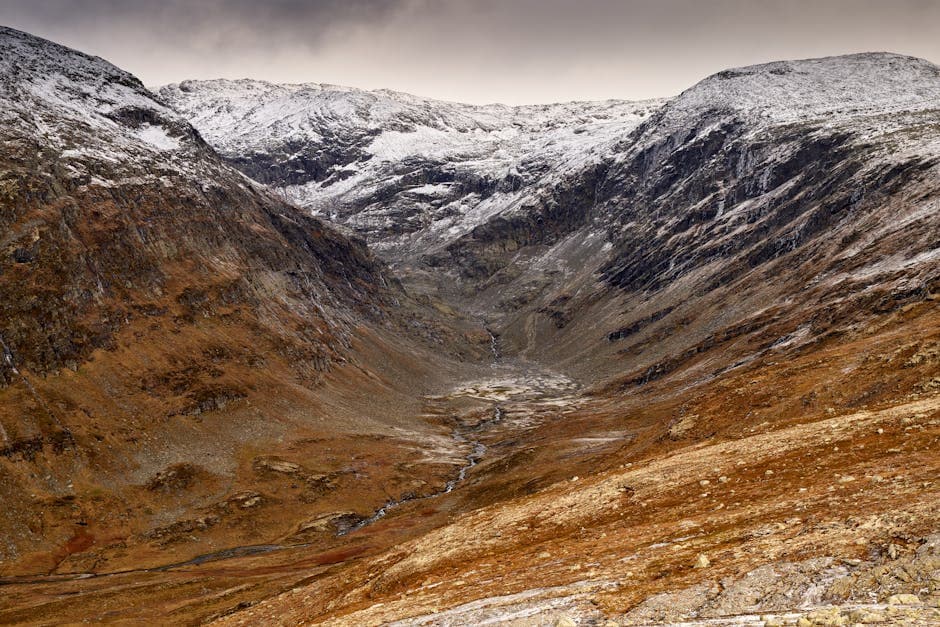
The valley itself is beautiful in a stark, Nordic way: mountains on either side, the Hesja River winding through the center, and during winter, a blanket of snow that makes any lights against the dark sky particularly vivid.
Timeline of Key Events
| Year | Event |
|---|---|
| 1930s | Earliest known reports of unusual lights in the valley |
| Dec 1981 | Dramatic increase in sightings begins (15-20 per week) |
| 1983 | Project Hessdalen field investigations begin |
| 1984 | Peak activity begins to subside |
| 1985 | First phase of field investigations ends |
| 1997-1998 | "Triangle Project" records lights in geometric formations |
| 1998 | Hessdalen Automatic Measurement Station installed |
| 2000-2002 | EMBLA project brings Italian and Norwegian researchers together |
| 2004 | Teodorani publishes long-term survey with spectral data |
| 2007 | Norwegian dust combustion theory announced (scandium-related) |
| 2010 | Paiva and Taft publish dusty plasma model |
| 2014 | Monari proposes "geological battery" hypothesis |
| Present | 10-20 sightings per year; monitoring continues |
Frequently Asked Questions
Are the Hessdalen lights still appearing?
Yes, though far less frequently than during the peak in the early 1980s. The valley currently sees 10 to 20 confirmed sightings per year. The automated monitoring station continues to operate and occasionally captures anomalous events on camera.
Have the Hessdalen lights been photographed?
Extensively. The Hessdalen AMS has captured thousands of images since 1998, and field researchers have photographed the lights during dedicated observation campaigns. Some of the most detailed images show internal structure within the lights, including clusters of smaller light balls arranged in geometric patterns. Much of this data is available through Project Hessdalen's website.
What's the by one account explanation for the Hessdalen lights?
There's no consensus, but the leading theories involve the valley's unusual geology. The "geological battery" model (where different metallic rock types and the river create an electrochemical cell) and the dusty plasma model (where radon decay ionizes dust in the atmosphere) are considered the most promising. It's also possible that multiple mechanisms are at work, producing different types of lights.
How are the Hessdalen lights different from the northern lights?
The aurora borealis occurs high in the upper atmosphere (60 to 200 miles up) and is caused by charged particles from the Sun interacting with Earth's magnetic field. The Hessdalen lights appear within the valley itself, often at or below the surrounding mountain ridgeline, sometimes just above the treetops. They're a localized phenomenon, not an atmospheric one, and their light spectrum is completely different from auroral emissions.
Is Hessdalen the only place where mystery lights appear?
No. Similar phenomena have been reported at dozens of locations worldwide, including Marfa, Texas; Brown Mountain, North Carolina; the Kimberley region of Australia (Min Min lights); and several locations in Japan and South America. What makes Hessdalen unique is the combination of frequency, scientific documentation, and the long-running permanent monitoring station. No other mystery light location has been studied as rigorously.
Want to explore more mysteries?
We've got plenty more rabbit holes to go down.