The Tunguska Event: What Exploded Over Siberia in 1908?
In 1908, a mysterious explosion flattened 800 square miles of Siberian forest. No crater, no fragments. Here's what we know about the Tunguska event.
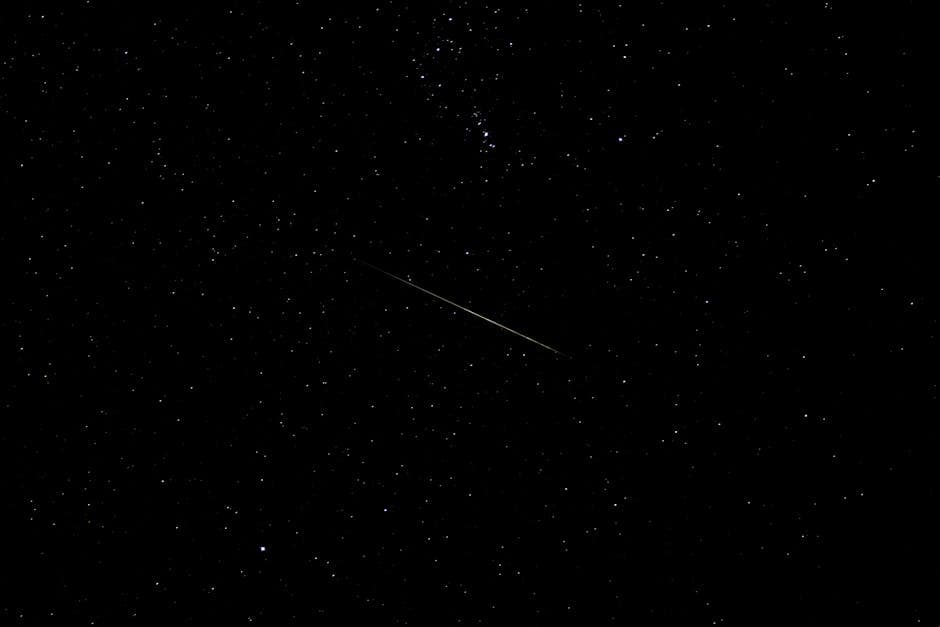
At 7:14 on the morning of June 30, 1908, something screamed across the sky above central Siberia and detonated with the force of roughly 12 megatons of TNT. That's about 800 times the power of the bomb dropped on Hiroshima. The blast flattened an estimated 80 million trees across 830 square miles of remote taiga forest near the Podkamennaya Tunguska River. Seismic stations across Europe picked up the shockwave. Barometric readings spiked as far away as England. For several nights afterward, the sky over Europe and Asia glowed so brightly that people in London could read newspapers at midnight without a lamp.
And here's the thing that's baffled scientists for over a century: there was no crater. No fragments. Whatever caused the largest impact event in recorded human history left almost nothing behind.
What You'll Learn
- •What Actually Happened on June 30, 1908?
- •Why Did It Take 19 Years to Investigate?
- •Was It an Asteroid or a Comet?
- •Why Was There No Crater?
- •The Grazing Asteroid Theory
- •Fringe Theories: Antimatter, Black Holes, and Tesla
- •What Would Happen if Tunguska Hit a City?
- •Frequently Asked Questions
What Actually Happened on June 30, 1908?
The Tunguska event took place in one of the most isolated regions on Earth. The Evenki people, indigenous reindeer herders who lived in the area, were the primary witnesses. Their accounts, collected years later by Russian researchers, paint a terrifying picture.
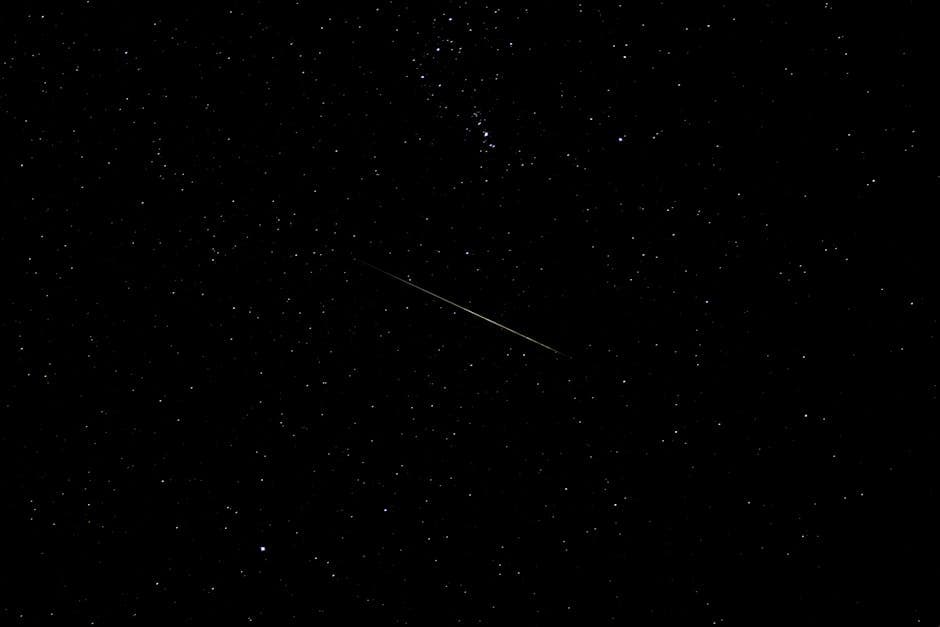
Witnesses roughly 40 miles from the epicenter described seeing a column of bluish-white light moving across the sky, nearly as bright as the sun. Then came a flash and a thunderous bang. The ground shook. Hot winds tore across the landscape, strong enough to throw people off their feet and rip doors from their hinges.
One Evenki man, sitting on his porch roughly 40 miles from ground zero, reported being thrown from his chair by the blast wave. He said the heat was so intense he thought his shirt was on fire. Trees around trading posts snapped like matchsticks. Reindeer herds scattered or were killed.
Seismographic stations in Irkutsk (about 550 miles away) recorded what they initially classified as an earthquake. The shockwave circled the globe twice, detected by microbarograph stations across Europe. In the days that followed, something stranger happened: night skies across Europe and western Russia lit up with an eerie silvery glow. Scientists at the time attributed it to noctilucent clouds, possibly formed by dust and ice from the object injected into the upper atmosphere.
The remote location meant there were no known human fatalities, though some Evenki accounts suggest a few herders may have died. If the explosion had occurred four hours and 47 minutes later, Earth's rotation would have placed St. Petersburg directly in the blast zone, potentially killing hundreds of thousands of people.
Why Did It Take 19 Years to Investigate?
This is one of the strangest parts of the Tunguska story. The largest explosion in modern history happened, and nobody went to look at it for nearly two decades.
The timing couldn't have been worse. Tsarist Russia in 1908 was lurching toward political collapse. The Russo-Japanese War had ended just three years earlier. Revolution was brewing. The explosion happened in one of the most inaccessible corners of Siberia, hundreds of miles from the nearest railroad. Getting there required weeks of travel by horse and river boat through mosquito-infested swampland.

Local newspapers published brief reports about a "meteorite" fall, but the story didn't gain traction in the scientific community. Then came World War I, the Russian Revolution, and the civil war that followed. Russia had bigger problems.
It wasn't until 1927 that mineralogist Leonid Kulik, working for the Soviet Academy of Sciences, organized the first scientific expedition to the blast site. What he found stunned him. Nearly 20 years after the event, the devastation was still clearly visible. Trees lay flattened in a massive radial pattern, all pointing away from a central point. But at that central point, some trees remained standing, stripped of their branches but upright, like telephone poles. This "telegraph pole" pattern is now recognized as characteristic of an aerial explosion, a blast that came from above.
Most puzzling of all: Kulik found no crater and no meteorite fragments. He spent years searching, draining bogs, digging trenches, and conducting aerial surveys. He found nothing. He returned for additional expeditions in 1928 and 1930, each time hoping to locate the impact site. Each time, he came up empty.
Kulik's work was interrupted by World War II. He volunteered for the militia, was captured by German forces, and died in a prisoner-of-war camp in 1942. He never solved the mystery that had consumed the last 15 years of his life.
Was It an Asteroid or a Comet?
This has been the central scientific debate about the Tunguska event for decades, and it's still not fully settled. Both theories have compelling evidence and frustrating gaps.
The Asteroid Hypothesis
The most widely accepted explanation today is that a stony asteroid, roughly 160 to 200 feet in diameter, entered Earth's atmosphere at about 33,500 miles per hour. The immense pressure and heat caused it to explode at an altitude of roughly 3 to 6 miles above the surface, creating an airburst rather than a ground impact.
This would explain the lack of a crater. The object never actually hit the ground. It disintegrated in the atmosphere, converting its kinetic energy into a massive blast wave. NASA scientists have modeled this scenario extensively, and the physics work out well. A 2013 study published in Icarus concluded that an asteroid between 100 and 200 feet across, entering at a shallow angle, could produce exactly the kind of damage observed at Tunguska.
The problem? If a stony asteroid exploded overhead, there should be microscopic fragments scattered across the blast zone. Researchers have found some tiny metallic spherules in the soil, but whether they're actually from the Tunguska object or from ordinary cosmic dust that's constantly raining down on Earth is still debated.
The Comet Hypothesis
The comet theory, championed by several researchers over the years, offers a tidy explanation for the missing evidence. Comets are mostly ice and dust. If a small comet entered the atmosphere and exploded, it would have vaporized almost completely, leaving no fragments behind. That would explain why Kulik never found his meteorite.

The bright night skies observed across Europe after the event also support this theory. A comet's icy composition could have injected massive amounts of water vapor and fine particles into the upper atmosphere, creating the unusual noctilucent clouds that caused the nighttime glow. A 2009 study from Cornell University suggested the night-sky luminescence pattern was consistent with a comet's trail re-entering the atmosphere.
The counterargument? A comet entering at the required speed and angle would likely have been visible as a bright object in the sky for days or weeks before impact, and there are no reliable astronomical observations of an approaching comet in the weeks before June 30, 1908.
Why Was There No Crater?
The absence of a crater was the first great mystery of Tunguska, and the one that fueled decades of alternative theories. When Kulik arrived expecting to find a massive impact site, the lack of one seemed almost impossible.
We now understand the concept of an airburst much better, thanks in part to nuclear weapons testing. When an object explodes at altitude, the blast wave radiates outward and downward, flattening everything below. But because the explosion happens in the air, not on the ground, it doesn't create a traditional impact crater.
The "butterfly" pattern of tree fall at Tunguska, documented through aerial photography and later satellite imagery, matches the signature of an airburst perfectly. The trees directly below the blast remained standing (hit by the shockwave from directly above), while trees farther out were knocked flat in a radial pattern.
In 2007, an Italian research team led by Luca Gasperini proposed that nearby Lake Cheko, a small body of water about 5 miles from the epicenter, might actually be an impact crater from a fragment that survived the airburst. Sediment core samples from the lake's bottom showed an unusual pattern consistent with a sudden formation event. However, a 2017 study using different dating techniques concluded that the lake likely predates the 1908 event by centuries. The debate continues.
The Grazing Asteroid Theory
One of the more intriguing recent theories comes from a 2020 study by researchers at Siberian Federal University. They proposed that the Tunguska event wasn't caused by an object that exploded in the atmosphere at all, but rather by an iron asteroid that grazed Earth's atmosphere and then continued on into space.
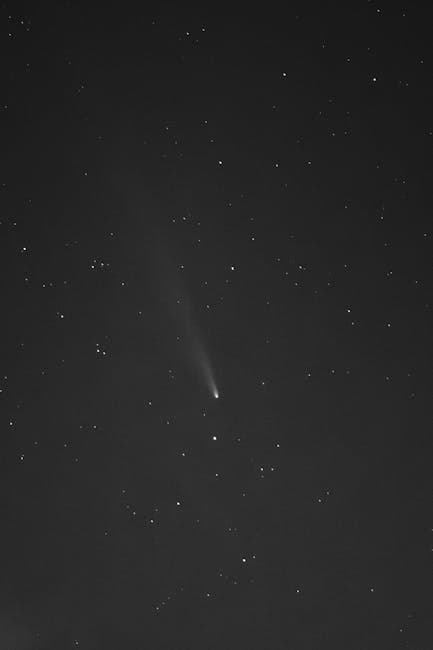
According to this model, an iron asteroid roughly 200 meters in diameter entered the atmosphere at a very shallow angle, generating an enormous shockwave as it passed through the dense lower atmosphere. The intense heat and pressure created the observed destruction on the ground. But because the object never actually slowed down enough to be captured by Earth's gravity, it punched through the atmosphere and exited back into space.
This would elegantly explain two persistent puzzles: why there's no crater and why there are no fragments. The asteroid never stopped; it just kept going.
Critics point out that an iron body of that size passing through the atmosphere at hypersonic speed should have left a far more extensive trail of damage than what's actually observed. The theory also requires very specific entry and exit angles that some physicists find unlikely. Still, it hasn't been definitively ruled out, and it remains one of the more creative solutions to the Tunguska puzzle.
Fringe Theories: Antimatter, Black Holes, and Tesla
No great mystery is complete without its share of unconventional explanations. Tunguska has attracted more than most.
The Antimatter Hypothesis
In 1965, Nobel Prize-winning physicists Clyde Cowan and Willard Libby proposed that a chunk of antimatter from space collided with Earth's atmosphere. When matter and antimatter meet, they annihilate each other completely, converting all their mass into energy. This would explain the enormous explosion and the total absence of physical evidence.
The idea is scientifically elegant but has a critical flaw: an antimatter annihilation would produce a distinctive gamma-ray signature. No evidence of such radiation has ever been found at the Tunguska site. Most physicists consider this theory highly unlikely, though it hasn't been conclusively disproven.
The Micro Black Hole
In 1973, physicists Albert Jackson and Michael Ryan suggested that a tiny black hole passed through the Earth at Tunguska. It would have entered in Siberia and exited somewhere in the North Atlantic, causing the observed destruction at the entry point.
The theory predicts a corresponding exit event somewhere in the ocean. No such event was ever recorded. Additionally, our modern understanding of black hole physics suggests that a micro black hole would either evaporate almost instantly through Hawking radiation or be far too massive to pass through Earth undetected. This theory is considered purely speculative.
The Tesla Connection
Perhaps the most colorful alternative theory links the Tunguska event to Nikola Tesla. According to this story, Tesla was testing his "death ray" or directed-energy weapon from his Wardenclyffe Tower laboratory on Long Island, and the experiment went wrong, accidentally striking Siberia.
There's no widely accepted evidence for this. Tesla's Wardenclyffe Tower was primarily designed for wireless communication and power transmission, and by 1908, the project was already financially troubled and partially dismantled. Tesla never claimed responsibility for the Tunguska event, and the physics of directed-energy transmission across that distance don't hold up. But it's a story that refuses to die, partly because Tesla himself made such grandiose claims about his inventions that it's hard to know where his real work ended and his speculation began.
UFO and Alien Craft Theories
Soviet science fiction writer Alexander Kazantsev proposed in 1946 that the Tunguska explosion was caused by an alien spacecraft's nuclear engine exploding during an attempted landing or crash. This theory gained surprising traction in the Soviet Union during the 1950s and 1960s, partly because it aligned with the popular cultural fascination with space exploration.
Some proponents pointed to the aerial explosion pattern (rather than a ground impact) as evidence of a controlled descent gone wrong. The lack of fragments could be explained if the "craft" was completely vaporized. But there's no physical evidence to support this, and the observed characteristics of the event are fully consistent with natural explanations.
What Would Happen if Tunguska Hit a City?
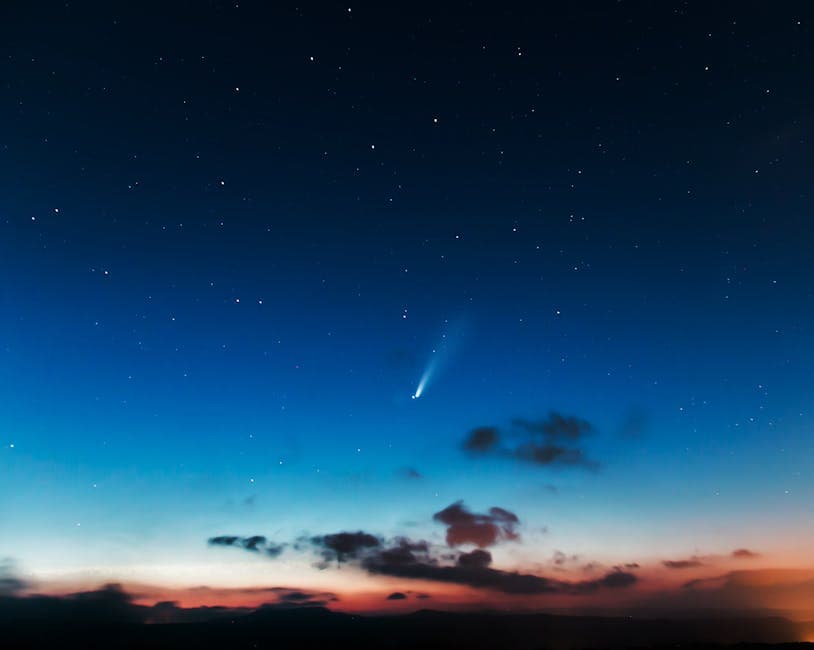
This isn't just an academic question. It's the reason the Tunguska event matters beyond historical curiosity.
The object that caused the Tunguska explosion was relatively small by cosmic standards, probably no more than 200 feet across. That's far too small for current asteroid survey programs to reliably detect and track. NASA's Planetary Defense Coordination Office focuses primarily on objects larger than 460 feet, though efforts to catalog smaller near-Earth objects are ongoing.
If a Tunguska-sized event occurred over a major city today, the results would be catastrophic. The 2013 Chelyabinsk meteor, which was only about 66 feet across and exploded at a much higher altitude, still shattered windows across the city and injured roughly 1,500 people. The Tunguska object was several times larger and detonated much closer to the ground.
Modeling by NASA and other agencies suggests a Tunguska-scale airburst over a city like London, Tokyo, or New York would cause destruction comparable to a large nuclear weapon, potentially killing millions of people. The blast wave alone would flatten buildings across an area the size of a major metropolitan region. This is why June 30 was designated International Asteroid Day in 2016, chosen specifically to commemorate the Tunguska event and raise awareness about the ongoing threat from near-Earth objects.
The Wow Signal, another unexplained event from deep space, reminds us how much we still don't understand about what's out there. And the Rendlesham Forest incident shows that even when unusual events happen closer to home, solid answers can be maddeningly hard to pin down.
Frequently Asked Questions
Did anyone die in the Tunguska event?
There are no confirmed deaths, largely because the explosion occurred in one of the most sparsely populated areas on Earth. Some Evenki oral histories mention herders who were killed or injured, but these accounts are difficult to verify. If the explosion had happened over a populated area, casualties would've been enormous.
What caused the bright nights after the Tunguska explosion?
For several nights following the event, skies across Europe and Asia glowed bright enough to read by at midnight. The leading explanation is that material from the exploding object, whether ice crystals from a comet or fine dust from an asteroid, was injected into the upper atmosphere and formed noctilucent clouds that scattered sunlight even after dark.
Has anything like Tunguska happened since?
The closest modern comparison is the 2013 Chelyabinsk meteor in Russia, which was much smaller but demonstrated the same airburst phenomenon. The Chelyabinsk object was about 66 feet across compared to Tunguska's estimated 160 to 200 feet. Scientists estimate Tunguska-scale events happen roughly once every few hundred years, while smaller Chelyabinsk-scale events may occur every 10 to 100 years.
Could we prevent a Tunguska-type event today?
Probably not, at least not yet. Current asteroid detection systems are designed to find objects much larger than the Tunguska body. NASA's DART mission in 2022 successfully demonstrated the ability to redirect an asteroid's orbit, but that technique requires years of advance warning. A Tunguska-sized object could easily slip through our detection network until it was too late.
Why is June 30 International Asteroid Day?
The United Nations designated June 30 as International Asteroid Day in 2016, specifically to commemorate the anniversary of the Tunguska event. The date serves as a reminder that cosmic impacts aren't just ancient history. They're an ongoing threat that we need to prepare for. The holiday promotes global awareness of asteroid detection and planetary defense efforts.
Over a century later, the Tunguska event remains one of those rare mysteries where we've got a pretty good idea of what happened, but we can't quite prove it. The forest has regrown. The evidence has faded. Whatever came screaming out of the sky that June morning in 1908, it left behind more questions than answers. If you're drawn to mysteries involving the unknown depths of our world, the Bermuda Triangle and the Dyatlov Pass incident offer similarly haunting puzzles where the evidence just doesn't add up the way you'd expect.
Want to explore more mysteries?
We've got plenty more rabbit holes to go down.