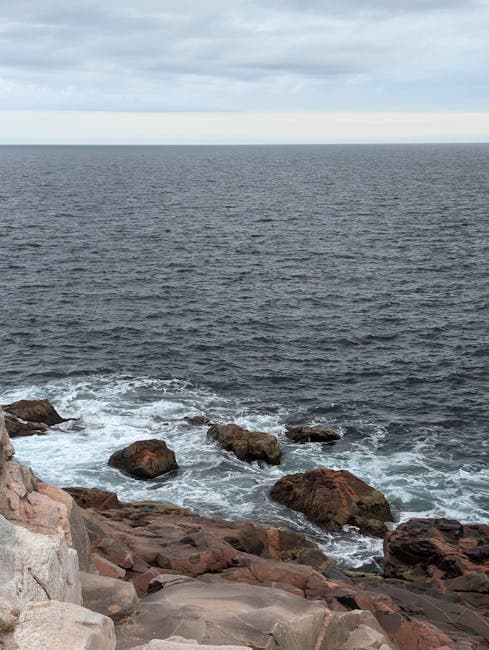
The Oak Island Money Pit: 230 Years of Digging and Still No Answers
Since 1795, treasure hunters have spent millions digging into Oak Island's Money Pit. From pirate gold to the Holy Grail, here's what they've found and haven't.
In the summer of 1795, a teenager named Daniel McGinnis wandered across Oak Island, a small wooded island off the coast of Nova Scotia, Canada. He noticed a circular depression in the ground beneath an old oak tree, with a ship's tackle block hanging from one of its branches. McGinnis grabbed two friends, John Smith and Anthony Vaughn, and they started digging. Ten feet down, they hit a platform of oak logs. Ten feet below that, another one. And another at thirty feet. They were young, superstitious, and spooked. They stopped digging and went home. That decision set off a treasure hunt that's now lasted over 230 years, cost millions of dollars, killed six people, and produced exactly zero confirmed treasure.
What You'll Learn
- •What Is the Oak Island Money Pit?
- •Who First Discovered the Pit?
- •A Timeline of Major Excavations
- •The Flood Tunnel System
- •What's Actually Been Found?
- •The Pirate Treasure Theory
- •The Knights Templar Connection
- •The French Naval Treasure Theory
- •Was It Just a Natural Sinkhole?
- •The Curse of Oak Island
- •Modern Exploration and the Lagina Brothers
- •Frequently Asked Questions
What Is the Oak Island Money Pit?
The Money Pit is a shaft on the eastern end of Oak Island, a 140-acre island in Mahone Bay, Nova Scotia. According to accounts first published in the 1850s and 1860s, early diggers found a series of wooden platforms spaced every ten feet as they dug deeper into the earth. At around 90 feet, they reportedly hit a large flat stone inscribed with mysterious symbols. And every time someone got close to what they believed was the bottom, the pit flooded with seawater, stopping excavation cold.
The name "Money Pit" is darkly appropriate. It's supposedly named for the treasure expected to come out of it, but it's equally fitting for the vast sums that have been poured in. Over two centuries, dozens of companies and individuals have mounted expeditions. They've drilled, pumped, tunneled, and blasted. They've found bits of gold chain, fragments of parchment, coconut fibers, and old wood. But the big prize, whatever it is, has never surfaced.
What makes Oak Island genuinely strange isn't just the pit itself. It's the apparent engineering. If the early accounts are accurate, someone went to extraordinary lengths to dig a deep shaft, line it with platforms, and build an elaborate drainage system designed to flood the pit if anyone tried to reach the bottom. That's not the work of someone burying a chest of coins. That's the work of someone protecting something they considered very, very valuable.
Who First Discovered the Pit?
The origin story comes to us through layers of retelling, which is part of the problem. The earliest known printed account appeared in the Liverpool Transcript in 1857, more than 60 years after the alleged discovery. The fuller version, published in 1862, drew on the memories of Anthony Vaughn, one of the three original diggers.
According to Vaughn's account, Daniel McGinnis found the depression in 1795 while looking for a place to build a farm. The story connects to local legends about Captain Kidd, the Scottish pirate who was captured in Boston in 1699 and hanged in London in 1701. A dying sailor from Kidd's crew had supposedly claimed that treasure worth £2 million was buried on the island.
It's worth noting that no contemporary documents from the 1790s mention the discovery. Everything we know comes from accounts written decades later. That doesn't mean it didn't happen, but it does mean we should hold the details loosely. Memory is unreliable, and stories grow in the telling.

A Timeline of Major Excavations
The history of Oak Island is really a history of people throwing money and lives at a hole in the ground. Here's how it unfolded:
1795: McGinnis, Smith, and Vaughn dig to 30 feet. They find oak platforms every 10 feet but stop due to fear and lack of resources.
1803: The Onslow Company arrives from central Nova Scotia. They dig to about 90 feet, finding more log platforms plus layers of charcoal, putty, and coconut fiber. They reportedly find the inscribed stone. Then the pit floods with 60 feet of seawater. A second shaft is dug, which also floods. They give up.
1849: The Truro Company re-excavates to 86 feet. More flooding. They drill bore holes and the auger reportedly passes through spruce, oak, "metal in pieces," and clay. Small pieces of gold chain are allegedly brought to the surface. A tunnel attempt fails when seawater breaks through again.
1861: The Oak Island Association digs multiple new shafts. The first accidental death occurs when a pump engine boiler explodes. The bottom of the original pit collapses, dropping any potential treasure even deeper. The company runs out of money.
1866: The Halifax Company drills exploratory holes. They find wood, coconut fiber, and blue mud. Nothing of value. They abandon the search in 1867.
1896-1898: A new group arrives with steam pumps. Drilling produces a tiny piece of sheepskin parchment with what appeared to be handwritten letters. Red paint poured into the flooded pit reportedly emerged from three exit points around the island, suggesting a sophisticated tunnel system.
1909: Captain Henry Bowdoin's Old Gold Salvage group arrives. Among its members is a young Franklin D. Roosevelt, then 27 years old. Roosevelt remained fascinated by Oak Island for the rest of his life.
1965: Robert Dunfield uses heavy equipment including a 70-ton crane. He digs a massive open pit, destroying much of the original shaft's context in the process. The exact location of the original Money Pit becomes uncertain after this point.
2006-Present: Brothers Rick and Marty Lagina begin their exploration, eventually becoming the subject of the History Channel's "The Curse of Oak Island."
The Flood Tunnel System
This is the detail that separates Oak Island from your average "buried treasure" story. Multiple expeditions have reported evidence of artificial tunnels connecting the Money Pit to the ocean, specifically to a nearby cove called Smith's Cove.
The Truro Company in the 1850s reportedly discovered five rock-lined drainage channels extending from Smith's Cove beach, converging into a single tunnel that appeared to lead toward the Money Pit. The idea was elegant and sinister: if anyone dug deep enough to reach the treasure, they'd breach the tunnel system, and the Atlantic Ocean would pour in to protect whatever lay below.
In 1898, investigators poured red paint into the flooded pit. According to reports, the dye appeared at three separate points around the island's shoreline, suggesting not one but multiple flood tunnels feeding into the shaft.
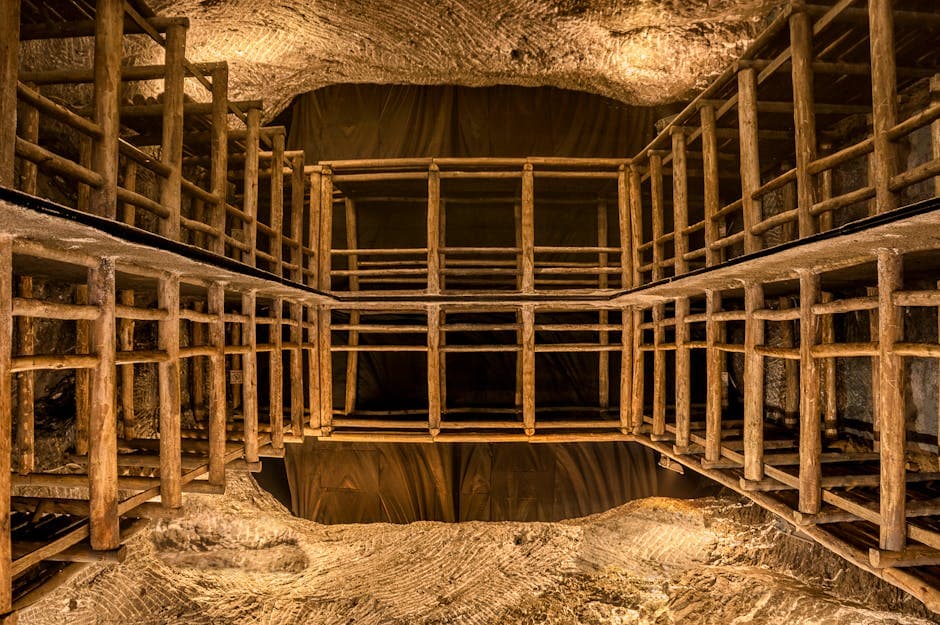
Skeptics have pointed out that the geology of Oak Island, which sits on limestone and anhydrite, naturally produces sinkholes and water channels. The "flood tunnels" might be attributed to natural geological features that early treasure hunters interpreted as man-made construction. The island's position in a tidal zone means underground water movement is inevitable.
Still, the coconut fiber found at Smith's Cove is harder to explain away. Coconuts don't grow in Nova Scotia. Someone brought that material there, and carbon dating has placed some samples as far back as the 1200s to 1400s. Whether it was part of an elaborate booby-trap system or had some other purpose entirely remains an open question.
What's Actually Been Found?
After 230 years of digging, what's the actual inventory? It's more interesting than "nothing" but far less than what you'd expect:
- •Oak platforms every 10 feet in the original shaft (reported by early diggers)
- •Coconut fiber and putty at various depths (coconuts aren't native to Nova Scotia)
- •An inscribed stone reportedly found at 90 feet. The stone was allegedly used as a fireplace backing for years before someone claimed to translate the symbols as "forty feet below, two million pounds are buried." The stone has since disappeared.
- •A small piece of sheepskin parchment with apparent handwriting, pulled from a drill bore in 1897
- •Three links of gold chain reported by the Truro Company's drill operation in 1849
- •Fragments of old wood carbon-dated to various centuries
- •A lead cross found in Smith's Cove, dated to roughly 1200-1600 CE
- •A stone with a carved "H" found near the Voynich Manuscript-level of cryptic intrigue
- •Portuguese and Spanish coins dating to the 17th century
- •A human bone fragment found in 2015, with DNA analysis suggesting origins in the Middle East and possibly Europe
None of these items confirm the presence of a major treasure. But they do confirm that human activity took place on the island well before the McGinnis discovery in 1795. Something was going on there. The question is what.
The Pirate Treasure Theory
The oldest and most straightforward theory: pirates buried their loot on Oak Island. Captain William Kidd is the most popular suspect. Kidd operated in the late 1600s and was known to have buried at least some treasure on Gardiner's Island in New York before his arrest. The dying sailor legend ties directly to Kidd.
Other candidates include Henry Avery (also spelled Every), who pulled off one of the most lucrative acts of piracy in history when he captured the Mughal ship Ganj-i-Sawai in 1695, and Blackbeard (Edward Teach), who reportedly said he'd buried his treasure "where none but Satan and myself can find it."
The problem with the pirate theory is the engineering. Pirates weren't known for elaborate construction projects. They buried treasure quickly and came back for it. A 100-foot shaft with platforms every 10 feet and a flood tunnel system connecting to the ocean? That's months or years of work by skilled laborers. Pirates didn't operate that way. They were criminals on the run, not civil engineers.
If pirates did bury something on Oak Island, they had help. Serious help.

The Knights Templar Connection
Here's where things get speculative, but it's a theory with surprisingly dedicated supporters. The Knights Templar were a medieval military order active from roughly 1119 to 1312 CE. When the order was disbanded and its members persecuted by King Philip IV of France, legend holds that the Templars fled with a vast collection of treasures, possibly including religious artifacts like the Holy Grail or the Ark of the Covenant.
Some researchers have pointed to connections between the Templars and early Scottish Freemasonry, and from there to Nova Scotia. Henry Sinclair, a Scottish nobleman with alleged Templar connections, may have sailed to Nova Scotia around 1398, nearly a century before Columbus. The lead cross found at Smith's Cove has been compared to Templar crosses, and some of the stone carvings found in the area resemble Templar symbolism.
The coconut fiber carbon-dated to the 1200s-1400s fits this timeline. If the Templars needed to hide something of enormous religious or political significance, a remote island off the coast of a continent that most Europeans didn't know existed would've been a reasonable choice.

Critics point out that the Sinclair voyage itself is debated among historians. The Templar connection relies on a chain of assumptions, each one requiring the previous one to be true. It's possible, but it's also the kind of theory that's more fun to believe than it is well-supported by evidence.
The French Naval Treasure Theory
A less dramatic but potentially more plausible theory suggests the Money Pit was built by the French military during the Seven Years' War (1756-1763). The French fortress of Louisbourg on nearby Cape Breton Island was a major stronghold, and when it fell to the British in 1758, the French treasury from the fortress was never accounted for.
Some historians have speculated that French military engineers, who certainly had the skills to construct elaborate underground works, moved the Louisbourg treasury to Oak Island for safekeeping. The timeline works. The engineering expertise works. And it would explain why the pit was built with such sophistication, military engineers build things to last.
Marie Antoinette's jewels have also entered the conversation. When the French royal family was threatened during the Revolution, the queen's lady-in-waiting supposedly smuggled her jewels out of France. One theory has them ending up in Nova Scotia through French colonial connections. It's thin, but it's been floated.
Was It Just a Natural Sinkhole?
The most deflating theory is that there's nothing there at all. Oak Island sits on a geological formation known for producing natural sinkholes. The "platforms" that early diggers found could have been natural accumulations of wood and debris at different levels of a sinkhole. The flooding isn't a booby trap; it's just what happens when you dig below the water table on a small island.
Geologist and author Joe Nickell has argued that the entire Money Pit legend is built on a foundation of exaggerated reports, wishful thinking, and Bermuda Triangle-style confirmation bias. Each new expedition interpreted ambiguous evidence in the most exciting way possible because they'd already spent money and wanted to believe.
The "metal in pieces" found by the Truro Company's drill? Could have been natural iron deposits. The coconut fiber? Possibly ship dunnage (packing material) washed ashore over centuries and naturally incorporated into the soil. The inscribed stone? Conveniently lost, so it can't be examined.
There's also the 1960s excavation by Robert Dunfield, which used heavy machinery and destroyed much of the original site. Any chance of systematically studying the original pit's structure was lost. We're now trying to solve a puzzle when someone has thrown away half the pieces.
The Curse of Oak Island
According to legend, the treasure won't be found until seven men have died searching for it and the island is completely cleared of oak trees. Six men have died in various excavation-related accidents since work began:
- •1861: A worker killed when a pump engine boiler exploded
- •1897: Maynard Kaiser fell to his death in one of the shafts
- •1965: Robert Restall, his son Bobby, Karl Graeser, and Cyril Hiltz all died from hydrogen sulfide gas exposure in a shaft. Robert went down first and was overcome by the fumes. His son jumped in to save him. Two workers followed. All four died.
That 1965 incident accounts for four of the six deaths and serves as a grim reminder that Oak Island isn't just a mystery. It's a genuinely dangerous place. Shafts flood, gas accumulates, and the ground itself is unstable from two centuries of digging.
Nearly all the oak trees on the island have been cut down over the years to fuel excavation operations. Whether that counts as "clearing" the island depends on your interpretation of the curse.
Modern Exploration and the Lagina Brothers
Since 2006, Michigan brothers Rick and Marty Lagina have been conducting the most technologically advanced exploration of Oak Island to date. Their work, documented in the History Channel series "The Curse of Oak Island" (premiering in 2014), uses ground-penetrating radar, seismic testing, DNA analysis, and core drilling that earlier expeditions couldn't dream of.
The Laginas have found some genuinely interesting items: the lead cross, pottery shards, coins, and that human bone fragment with Middle Eastern DNA. They've also used modern survey techniques to map underground anomalies and have identified what they believe is a ship buried in a swamp on the island.
But after nearly two decades of searching with modern technology, they still haven't found the "treasure." What they've found is evidence that people were on Oak Island doing something before 1795. The question of what they were doing remains stubbornly unanswered.
The show itself has become part of the Oak Island economy. Tourism to the island has increased dramatically. The Dyatlov Pass Incident might be Russia's most famous unsolved mystery; Oak Island holds that title for Canada. Whether anyone finds treasure at the bottom of the pit or not, the mystery itself has become the real treasure, at least for the local tourism board and the History Channel.
What We Know and What We Don't
Here's an honest assessment of where we stand:
We know: People were on Oak Island before 1795. Carbon dating and artifact finds confirm this. Something was dug, built, or stored there.
We know: The island's geology is naturally prone to flooding and sinkholes. Not every strange feature needs a human explanation.
We don't know: Whether the original pit was man-made or a natural formation embellished by legend. The original site has been so thoroughly disturbed by 230 years of treasure hunting that definitive answers may be impossible.
We don't know: What, if anything, was originally buried there. Every piece of "evidence" has at least one conventional explanation.
The Oak Island Money Pit might contain pirate gold, Templar artifacts, French military treasure, or Shakespeare's lost manuscripts. It might contain nothing at all. After 230 years, six deaths, and millions of dollars, the honest answer is: we still don't know. And that's what keeps people digging.
Perhaps the real lesson of Oak Island isn't about treasure at all. It's about what happens when a good story takes root. Once people believe something is buried on that island, no amount of failure, flooding, or death can convince them to stop looking. The Lost Colony of Roanoke vanished without a trace and we've been searching for them for over 400 years. Some mysteries don't want to be solved. Or maybe we don't want them solved, because the searching is the point.
Frequently Asked Questions
Has anyone ever found treasure on Oak Island?
No confirmed treasure has ever been recovered from the Money Pit. Small artifacts have been found over the years, including fragments of gold chain, a piece of parchment, old coins, and a lead cross. These items are intriguing but don't constitute the large treasure that legends describe. The most significant finds have come from the Lagina brothers' modern exploration, which has turned up items suggesting pre-1795 human activity on the island.
How deep is the Oak Island Money Pit?
The original shaft was excavated to roughly 90-100 feet by early treasure hunters before flooding stopped their progress. Subsequent expeditions have drilled and dug even deeper, with some bore holes extending past 200 feet. The 1960s excavation by Robert Dunfield used heavy machinery to dig to significant depths, but this work destroyed much of the original shaft's structure and made it impossible to determine the pit's true original depth.
Who built the Oak Island Money Pit?
Nobody knows for certain. The most popular theories attribute construction to pirates (particularly Captain Kidd), the Knights Templar, French military engineers, or a combination of groups over different time periods. Some geologists argue the pit is largely a natural sinkhole formation that early explorers mistook for a man-made shaft. The engineering described in historical accounts would've required significant labor and expertise, which argues against casual construction.
How many people have died searching for Oak Island treasure?
Six people have died during treasure-hunting operations on Oak Island. The deadliest incident occurred in 1965 when Robert Restall, his son Bobby, and two workers (Karl Graeser and Cyril Hiltz) died from hydrogen sulfide gas poisoning in a shaft. Earlier deaths include a worker killed in an 1861 boiler explosion and Maynard Kaiser, who fell into a shaft in 1897.
Is the Oak Island treasure curse real?
The curse is part of the island's folklore, not a documented historical fact. It states that seven men must die before the treasure is found. With six deaths so far, some believe one more is needed to fulfill the curse. Skeptics view the "curse" as a narrative device that emerged in the 1800s to explain the dangers of deep shaft mining on a flood-prone island. The real dangers are well-documented: gas buildup, shaft collapses, and flooding have all caused injuries and deaths.
Want to explore more mysteries?
We've got plenty more rabbit holes to go down.