The Mothman of Point Pleasant: Harbinger of Doom or Misidentified Bird?
For 13 months in 1966-67, residents of Point Pleasant, West Virginia reported a winged creature with glowing red eyes. Then the Silver Bridge collapsed, killing 46 people. Coincidence?
On the night of November 15, 1966, two young couples were driving past an old World War II munitions plant outside Point Pleasant, West Virginia, when their headlights caught something that shouldn't have been there. It was tall, maybe seven feet, with a shape that was vaguely human but definitely wasn't. And it had eyes. Large, red, glowing eyes that reflected the light like bicycle reflectors. The thing spread its wings and followed their car as they sped away at over 100 miles per hour.
That encounter kicked off 13 months of sightings, paranoia, and speculation that would culminate in one of the worst bridge disasters in American history. To this day, nobody can fully explain what people saw in the hills and hollows around Point Pleasant. Was it something truly unknown? A displaced bird startling people in the dark? Or something stranger still?
Let's look at what we actually know.
What You'll Learn
- •The First Sightings: November 1966
- •The TNT Area: Mothman's Hunting Ground
- •What Did Witnesses Actually Describe?
- •The Silver Bridge Collapse
- •The Misidentified Bird Theory
- •The Paranormal Theory: John Keel and The Mothman Prophecies
- •Mass Hysteria and Social Contagion
- •Modern Sightings and Cultural Legacy
- •Frequently Asked Questions
The First Sightings: November 1966
The story actually begins three days before the famous encounter. On November 12, 1966, five men were digging a grave at a cemetery near Clendenin, West Virginia, about 70 miles northeast of Point Pleasant. According to their account, a large brown figure rose from the trees nearby and flew low over their heads. They described it as a "brown human being" with wings.
Nobody paid much attention. Gravediggers seeing strange things at dusk? Easy to dismiss.
But three days later, Roger and Linda Scarberry, along with Steve and Mary Mallette, had their encounter near the old munitions plant. They reported it to the Mason County Sheriff's office that same night. Deputy Millard Halstead found the couples "genuinely frightened" and took the report seriously enough to investigate the area, though he found nothing unusual.
The next morning, the Point Pleasant Register ran a story with the headline: "Couples See Man-Sized Bird...Creature...Something." The paper's copy editor, it seems, wasn't quite sure what to call it either. But within days, someone connected the creature to the popular Batman TV series and its villain gallery, and the name "Mothman" stuck.
Over the following weeks, sightings multiplied. On November 16, three adults and a group of children in the Salem area reported seeing a creature with red eyes. On November 24, four people driving near the TNT area saw the creature flying overhead. Newell Partridge, a contractor living nearby, reported that his television had started making strange buzzing sounds before his German Shepherd, Bandit, ran toward the barn growling. When Partridge shone a flashlight into the field, he saw two red circles that looked like eyes staring back at him. Bandit was never seen again.
By the end of November, Mason County Sheriff George Johnson was fielding calls almost daily. He publicly stated that he believed people were seeing an unusually large heron, which locals call a "shitepoke." Not everyone agreed with the sheriff's assessment.
The TNT Area: Mothman's Hunting Ground
Most of the early sightings clustered around a specific location: the McClintic Wildlife Management Area, known locally as "the TNT area." During World War II, this 2,500-acre site served as a munitions manufacturing and storage facility for the U.S. Army. Dozens of concrete igloos, dome-shaped bunkers used to store explosives, dotted the landscape. By the 1960s, the site had been partially converted to a wildlife preserve, but the bunkers remained, slowly being reclaimed by vegetation.
The TNT area was a popular hangout spot for teenagers and young couples. Its remoteness and creepy atmosphere made it the perfect setting for local legends even before Mothman showed up. The abandoned bunkers, dark woods, and isolation created an environment where any strange sound or shadow could trigger fear.
It's also worth noting that the former munitions plant left behind significant chemical contamination. The site was later designated an EPA Superfund location due to TNT and other explosive residues in the soil and groundwater. Whether this environmental contamination played any role in the sightings, either by affecting local wildlife or human perception, is an open question that nobody has seriously studied.
What Did Witnesses Actually Describe?
This is where things get interesting, because the descriptions weren't entirely consistent. The core features that most witnesses agreed on included:
- •Height: Between six and seven feet tall
- •Eyes: Large, red, and glowing, set wide apart
- •Wings: Large, bat-like or bird-like, with a wingspan estimated at 10 to 15 feet
- •Color: Gray or brown
- •Speed: Could reportedly keep pace with cars traveling at highway speeds
However, the details varied. Linda Scarberry described a "slender, muscular man" with white wings, but said she couldn't make out a face because the eyes had a "hypnotic" quality. Others described something more birdlike. Some witnesses reported a screeching sound. Others said the creature was completely silent.
One consistent detail across multiple reports: the eyes. Nearly every witness mentioned the glowing red eyes. They weren't just red; they seemed to emit their own light, particularly when caught in headlights or flashlights. This detail would become critical to later skeptical analyses.
Mason County Sheriff Johnson logged over 100 reports during the 13-month period. However, folklorist Jan Harold Brunvand later pointed out that many of these reports were secondhand, sourced from sensationalized press accounts or children's books rather than direct witness statements. The number of truly independent, first-person accounts is harder to pin down.
The Silver Bridge Collapse
On December 15, 1967, almost exactly 13 months after the first Mothman sighting, disaster struck Point Pleasant. At 5:04 PM during rush hour, the Silver Bridge, a 39-year-old suspension bridge spanning the Ohio River between Point Pleasant and Gallipolis, Ohio, collapsed without warning. Thirty-one vehicles plunged into the icy river. Forty-six people died, and two bodies were never recovered.
The National Transportation Safety Board investigation, which took three years to complete, determined that the collapse was caused by the failure of a single eyebar in one of the suspension chains. A stress corrosion crack just 0.1 inches deep had formed in the steel, invisible to inspection. The bridge's design was inherently vulnerable because it lacked redundancy: most suspension bridges use multiple parallel chains or cables, but the Silver Bridge relied on single eyebar chains. When one link failed, the entire structure came down in under a minute.

The bridge collapse was a straightforward engineering failure. But in the grief and shock that followed, some residents began drawing connections to the Mothman sightings. Several people claimed they'd seen the creature near or on the bridge in the days before the collapse. These reports were largely retrospective, surfacing after the disaster rather than before it.
After the bridge fell, the Mothman sightings essentially stopped. This timing created the most enduring element of the legend: the idea that Mothman was a harbinger of doom, a creature whose appearance warned of coming catastrophe.
The Misidentified Bird Theory
The most widely accepted scientific explanation is that witnesses were seeing a large bird, misidentified under poor lighting conditions and amplified by fear and expectation.
Dr. Robert L. Smith, a wildlife biologist at West Virginia University, told reporters at the time that the descriptions matched a sandhill crane. These birds stand nearly five feet tall, have wingspans up to seven feet, and have distinctive patches of bare, reddish skin around their eyes. A sandhill crane is big enough to startle anyone who isn't expecting to see one, and in the dark, those red eye patches could easily appear to glow when caught in a light source.
The problem with this theory is that sandhill cranes don't typically inhabit West Virginia. Their migration routes generally pass further west. However, individual birds do occasionally wander outside their normal range, and a lost crane in unfamiliar territory might behave erratically, making it even more alarming to encounter.
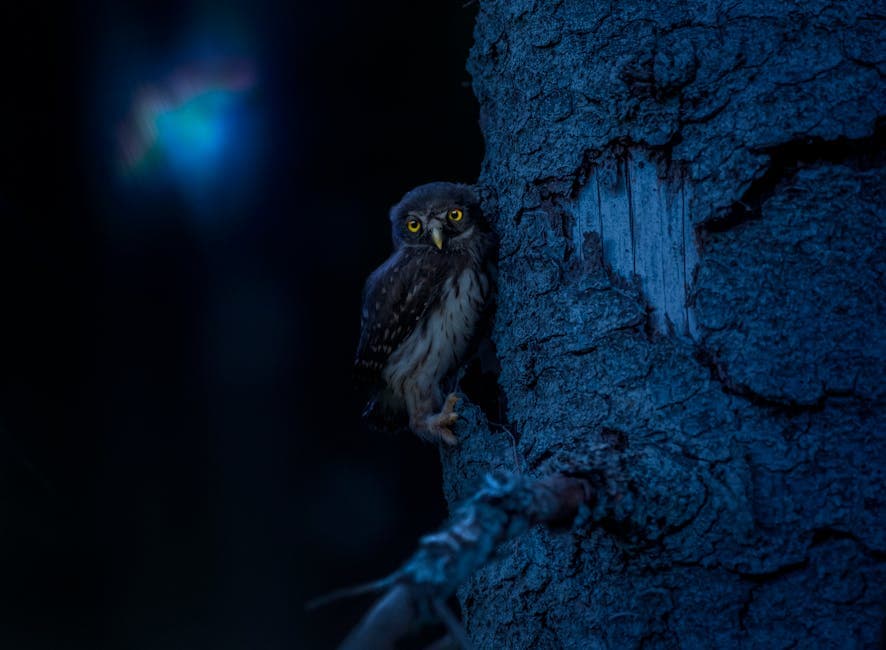
Skeptical investigator Joe Nickell proposed barred owls as another candidate. Barred owls are common in West Virginia, have large, round, reflective eyes, and can appear surprisingly large when seen up close with wings spread. The "bicycle reflector" description that Newell Partridge used matches how owl eyes look when caught in a flashlight beam. Owls are also known to follow moving objects, including cars, which could explain reports of the creature pursuing vehicles.
A 2022 analysis published in Skeptical Inquirer by researcher Daniel A. Reed examined the migration data and concluded that while a sandhill crane was possible, a great blue heron was a more likely candidate for some sightings, given that herons are native to the region and can stand over four feet tall with six-foot wingspans.
The bird theory doesn't explain every detail, particularly the reported size (seven feet tall) and the ability to match car speeds. But frightened witnesses at night, dealing with a creature they didn't recognize, could easily overestimate size and speed. The psychological literature on eyewitness testimony consistently shows that stress and fear distort perception, particularly estimates of size and distance.
The Paranormal Theory: John Keel and The Mothman Prophecies
No discussion of Mothman is complete without journalist John Keel, who arrived in Point Pleasant in December 1966 and spent months investigating the sightings. His 1975 book, The Mothman Prophecies, transformed the story from a regional curiosity into a worldwide phenomenon.
Keel didn't just collect Mothman accounts. He wove them together with reports of UFO sightings, encounters with mysterious "Men in Black," strange phone calls, and claims of prophetic visions experienced by local residents. In Keel's telling, the Mothman sightings were part of a much larger pattern of paranormal activity centered on Point Pleasant, possibly connected to ultraterrestrial beings from another dimension.
Keel claimed that a contact he called "Indrid Cold" had predicted the bridge collapse before it happened. However, the verifiability of Keel's accounts is questionable. He was a journalist with a known interest in the paranormal, not a scientific investigator, and much of his material relies on unrecorded conversations and anonymous sources.
The book was adapted into a 2002 film starring Richard Gere, which further cemented the Mothman-as-harbinger narrative in popular culture. The movie took significant liberties with Keel's already speculative account, but it brought the story to millions who'd never heard of Point Pleasant.
For believers in the paranormal interpretation, the strongest evidence is the timing: sightings began abruptly, centered on a specific area, and stopped after the bridge disaster. The weakest evidence is everything else. There's no physical evidence, no photographs taken during the original sighting period, and no mechanism that would connect a flying creature to a bridge collapse caused by metal fatigue.
Mass Hysteria and Social Contagion
There's a third explanation that's worth considering, one that doesn't require either a real creature or paranormal activity: social contagion, sometimes called mass hysteria.
After the initial newspaper coverage in November 1966, Point Pleasant was primed for more sightings. The pattern is well-documented in psychology: once a frightening event gets publicity, people become hypervigilant. Normal things, an owl in a tree, a large bird at dusk, a shadow, get reinterpreted through the lens of the reported threat. Each new sighting reinforces the belief, which generates more sightings.
This doesn't mean witnesses were lying. They genuinely believed they saw something unusual. But belief and perception aren't the same thing. In the dark, on a deserted road near an abandoned munitions plant, your brain is already working overtime to detect threats. Give it a framework (there's a monster in these woods), and it'll find evidence for that framework, whether it's really there or not.
The Dyatlov Pass incident, another case from our archives, shows how a real but ultimately explainable event can generate decades of increasingly exotic theories when the straightforward explanation doesn't satisfy our need for narrative.
The social contagion theory also explains why sightings stopped after the bridge collapse. The disaster was so overwhelming, so real and devastating, that it displaced the Mothman narrative. The community's attention shifted entirely to grief, recovery, and the very concrete question of why their bridge had fallen. There was no more psychological bandwidth for monster sightings.
Modern Sightings and Cultural Legacy
While the original sighting wave ended in December 1967, Mothman hasn't been forgotten. Point Pleasant has embraced its most famous resident with a 12-foot metallic statue downtown, a dedicated museum (the Mothman Museum), and an annual Mothman Festival that draws thousands of visitors every September.
Sporadic sightings continue. In 2016, a driver on Route 2 in Mason County photographed what he claimed was Mothman. Skeptic Sharon Hill analyzed the image and concluded it showed "a bird, perhaps an owl, carrying a frog or snake away." In 2017, several people in Chicago reported seeing a large, winged, humanoid figure, though these reports were never substantiated.
The Mothman legend has also spread internationally. Russian UFOlogists claimed that Mothman-like creatures were spotted in Moscow before the 1999 apartment bombings, and similar claims have been attached to other disasters, retroactively turning the creature into a global omen of catastrophe.
Netflix's Unsolved Mysteries revisited the case in 2024, featuring new interviews with Point Pleasant residents who maintain that sightings continue to this day. The episode highlighted how deeply the legend has become embedded in the town's identity, for better or worse.
What's fascinating about Mothman is how the story has evolved. The original 1966 reports describe something that sounds like a large, unusual bird. By the time Keel's book came out in 1975, it had become an interdimensional entity connected to UFOs and prophecy. Today, it's simultaneously a tourist attraction, a cultural icon, and an ongoing mystery. The creature means different things to different people, and that flexibility is part of why the legend endures.
Like the Wow! Signal, another mystery from our collection, the Mothman story persists partly because it sits in an uncomfortable space between explanation and mystery. The bird theory is plausible but doesn't account for every detail. The paranormal theory accounts for more details but lacks evidence. And the truth might be something we haven't considered yet.
Or it might be something else entirely — something that visited Point Pleasant for thirteen months, was seen by over a hundred people, and then vanished as suddenly as it appeared. The Lost Colony of Roanoke reminds us that unexplained disappearances can generate centuries of speculation, even when conventional explanations exist.
We don't know for certain. And that's what makes it worth investigating.
Frequently Asked Questions
Is the Mothman real?
Over 100 reports were logged by the Mason County Sheriff's office between 1966 and 1967. More than a hundred people — including couples, families, and groups who didn't know each other — described remarkably similar encounters: a massive winged figure, six to seven feet tall, with glowing red eyes, capable of keeping pace with cars traveling over 100 mph. That many independent witnesses describing the same thing is hard to dismiss.
Did Mothman cause the Silver Bridge collapse?
The NTSB attributed the Silver Bridge collapse to a stress corrosion crack in an eyebar. But the timing haunts this case: thirteen months of intense Mothman activity, then 46 people die in the worst bridge disaster in the region's history, and the sightings abruptly stop. John Keel documented the connection in The Mothman Prophecies, and multiple witnesses have maintained they saw the creature near the bridge in the days before December 15, 1967. Coincidence is one word for it. The people of Point Pleasant have another.
What was the Mothman by one account?
Some have suggested sandhill cranes, great blue herons, or barred owls. But the witnesses — many of them hunters and outdoorsmen who knew local wildlife intimately — were adamant that what they saw was not a bird. It stood upright, had a wingspan of 10-15 feet, flew without flapping, and had self-luminous red eyes (not reflected light — witnesses described them glowing in complete darkness). Whatever it was, the people who saw it up close were certain it was something they'd never encountered before.
Can you visit Mothman sites in Point Pleasant?
Yes. Point Pleasant features a 12-foot Mothman statue, the Mothman Museum, and an annual Mothman Festival held each September. The TNT area (McClintic Wildlife Management Area) is also accessible, though it's an EPA Superfund site, so visitors should stay on marked trails.
Are there still Mothman sightings today?
Reports have never fully stopped. A striking photograph emerged from Mason County in 2016, and Chicago experienced its own wave of winged humanoid sightings in 2017 — dozens of independent reports over several months. Point Pleasant residents interviewed for Netflix's 2024 Unsolved Mysteries episode maintained that sightings still occur in the area. Whatever people first saw in 1966, it seems to still be out there.
Want to explore more mysteries?
We've got plenty more rabbit holes to go down.