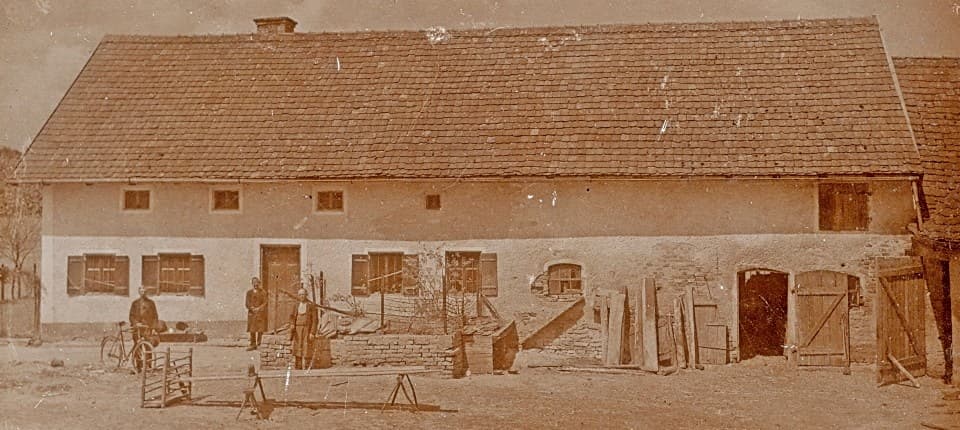
The Hinterkaifeck Murders: Germany's Most Chilling Unsolved Crime
In 1922, six people were murdered on a remote Bavarian farm. The killer stayed for days. Footprints led in but never out. The case remains unsolved.
In the days before the Hinterkaifeck murders, Andreas Gruber told his neighbors about something that was bothering him. He'd found footprints in the fresh snow. They led from the edge of the forest to his farmstead, to a door with a broken lock that opened into the machine room. But there were no footprints leading back.
Someone had walked out of the woods, entered his property, and apparently never left.
That same week, the family heard footsteps in the attic. Andreas searched but found no one. The previous maid had quit months earlier, claiming the house was haunted. A newspaper from Munich appeared on the property that no one had purchased or subscribed to. Keys went missing.
Andreas Gruber told people about all of this. He didn't call the police. He didn't accept offers of help. Days later, on the evening of March 31, 1922, someone murdered all six people living on the farm with a mattock. Then the killer stayed. For three days, they ate the family's food, fed the livestock, and used the fireplace while six corpses lay in the barn and the house.
The Hinterkaifeck murders are considered the most infamous unsolved crime in German history. Over a century later, no one has been definitively identified as the killer.
What You'll Learn
- •Who Were the Victims?
- •The Strange Events Before the Murders
- •What Happened on the Night of March 31, 1922?
- •The Killer Stayed for Days
- •How Were the Bodies Discovered?
- •Why Was the Investigation Botched?
- •Who Were the Main Suspects?
- •The Incest Scandal
- •Could the Killer Have Been Living on the Farm?
- •Why Has This Case Never Been Solved?
- •Frequently Asked Questions
Who Were the Victims?
The Hinterkaifeck farmstead sat about 70 kilometers (43 miles) north of Munich, in rural Bavaria. The name itself tells you something about the isolation: "Hinter" means "behind" in German, and Kaifeck was a small nearby hamlet. The farm was essentially behind Kaifeck, about a mile north, bordered by dense woods.
Six people lived there:
- •Andreas Gruber, 63, the patriarch
- •Cäzilia Gruber (née Sanhüter), 72, his wife
- •Viktoria Gabriel, 35, their widowed daughter
- •Cäzilia Gabriel, 7, Viktoria's daughter
- •Josef Gruber, 2, Viktoria's son
- •Maria Baumgartner, 44, the new maid, who had arrived just hours before the murders

Viktoria's husband, Karl Gabriel, had been killed in World War I at the Battle of Arras in December 1914. After his death, Viktoria remained on the farm with her parents and her children. The family was not well-liked in the community, for reasons that would become clearer during the investigation.
The Strange Events Before the Murders
The weeks leading up to March 31 were filled with unsettling incidents that, in hindsight, suggest someone was watching the family or even hiding on the property.
Six months before: Kreszenz Rieger, the family's maid, quit. She later said she'd heard strange noises coming from the attic and believed the house was haunted.
Weeks before: A Munich newspaper appeared on the farm that no one had bought or subscribed to. Andreas couldn't explain where it came from. No one in the surrounding area subscribed to it either.
Days before: Andreas found fresh footprints in the snow leading from the forest to the farm's machine room, which had a broken lock. There were no footprints leading away.

The same night: The family heard footsteps in the attic. Andreas went up to look. He found no one.
Keys went missing from the house and were never recovered.
The night before the murders: According to a school friend of young Cäzilia Gabriel, the girl reported that her mother Viktoria had fled the farmstead after a violent argument with Andreas, and was found hours later in the forest.
Andreas told multiple neighbors about the footprints and the attic noises. He refused help. He didn't report any of it to police. Why an experienced, 63-year-old farmer would ignore such clear signs of intrusion is one of the smaller mysteries inside the larger one.
What Happened on the Night of March 31, 1922?
On the afternoon of Friday, March 31, 1922, the new maid, Maria Baumgartner, arrived at Hinterkaifeck. Her sister escorted her to the farm and left shortly after. Maria would be alive for only a few more hours. She'd worked at Hinterkaifeck for a single day.
That evening, the family members were lured to the barn one at a time, through the stable. There, they were killed with a mattock (a heavy agricultural tool similar to a pickaxe) with blows to the head. The killer appears to have called or lured each person individually, killing them before the next arrived.
The order, reconstructed from the autopsies, suggests:
- •Andreas Gruber was likely killed first in the barn
- •Cäzilia Gruber (his wife) followed
- •Viktoria Gabriel came next
- •Young Cäzilia Gabriel (age 7) was the last killed in the barn
The autopsy of little Cäzilia revealed something particularly horrifying: clumps of her own hair were found in her hands, suggesting she'd been pulling at her hair in terror for an extended period before being killed. She may have watched her family die.
After the four barn killings, the perpetrator moved into the house. Two-year-old Josef was killed in his bassinet. Maria Baumgartner was murdered in her bedchamber. The same mattock was used on all six victims.
The Killer Stayed for Days
This is the detail that elevates the Hinterkaifeck murders from a horrible crime into something profoundly disturbing.
After killing six people, the murderer didn't flee. They stayed on the farm for approximately three days. During that time, they:
- •Ate the family's food
- •Fed the farm animals
- •Used the fireplace
- •Tore off the March 31 page from the kitchen calendar, revealing April 1

Four of the bodies were stacked in the barn. Two remained in the house. The killer moved through the property for days with corpses in both locations.
This behavior suggests several things. The killer was comfortable on the farm, either because they'd been there before or because they'd been secretly living there already. They weren't in a hurry. They weren't panicked. And they had enough familiarity with the property to tend to the animals and navigate the buildings.
Neighbors and delivery people visited during those three days but failed to make contact with anyone. The gate was open but no one answered knocks. Life in the surrounding area continued normally while, on this isolated farmstead, a killer ate breakfast next to the bodies of the people they'd murdered.
How Were the Bodies Discovered?
The murders went unnoticed for four days.
- •April 1: Coffee sellers Hans and Eduard Schirovsky arrived to take an order. No one answered. They noticed the machine room gate was open but left.
- •April 1-3: Young Cäzilia was absent from school without excuse. The Gruber family missed Sunday church.
- •April 4, morning: Mechanic Albert Hofner arrived to repair an engine. He waited an hour, saw no one, completed his work alone over four and a half hours, and left.
- •April 4, afternoon: Lorenz Schlittenbauer, a neighbor (and key suspect), sent his teenage son and stepson to check on the family. They reported seeing no one. Schlittenbauer then visited the farm himself with neighbors Michael Pöll and Jakob Sigl.
They found the four bodies in the barn first. Then they found Maria and Josef inside the house. Police were summoned from Munich.
Why Was the Investigation Botched?
Inspector Georg Reingruber led the Munich investigative team, but the crime scene had already been hopelessly contaminated. Before police arrived, onlookers had:
- •Moved the bodies
- •Handled potential evidence
- •Walked through the entire property
- •Cooked meals in the kitchen
The forensic science of 1922 was already limited. Combined with a destroyed crime scene, investigators had little to work with.
On April 5, court physician Johann Baptist Aumüller performed autopsies on all six victims, confirming the mattock as the murder weapon. The weapon itself was later found hidden in the barn loft.

In a bizarre twist, the victims' heads were later removed from their bodies and sent to Munich, where they were examined by clairvoyants for "metaphysical clues." The skulls were subsequently lost, and their current whereabouts remain unknown.
Less than a year after the murders, the farm was demolished to remove any reminder of the violence. During demolition, workers found additional evidence: a blood-covered mattock hidden in the attic and a penknife in the hay. A small concrete memorial was erected near where the farm once stood.
Over the following century, the case was reopened multiple times. In 1986, Munich police students re-examined all surviving evidence. In 2007, investigators used modern forensic techniques on the case files. Neither effort produced a definitive answer.
Who Were the Main Suspects?
Over 100 suspects were investigated over the decades. The most prominent:
Lorenz Schlittenbauer
Schlittenbauer was Viktoria's neighbor and lover. He'd initially claimed to be the father of Viktoria's son Josef, agreed to adopt the boy, then withdrew when the incest scandal emerged (see below). He was the one who "discovered" the bodies, was among the first on the scene, and some witnesses noted his behavior was oddly calm and familiar with the property that day.
Schlittenbauer had financial disputes with the Gruber family and had been publicly humiliated by the incest revelations. He conducted and won several civil claims for slander against people who called him the "murderer of Hinterkaifeck" before his death in 1941. He was never charged.
Adolf Gump
Identified as a suspect as early as April 9, 1922, just a week after the murders. Gump had connections to far-right political groups active in Bavaria at the time. The political climate in Bavaria in 1922 was volatile, with various extremist factions operating throughout the countryside. However, no conclusive evidence tied Gump to the murders.
Karl Gabriel (Viktoria's "dead" husband)
One persistent theory suggests that Karl Gabriel, officially killed at the Battle of Arras in 1914, may not have actually died. Some theorists propose he returned under an alias, discovered the incestuous situation at the farm, and murdered his wife's family in a rage. There's no solid evidence supporting this theory, and military records indicate Gabriel was indeed killed in action.
An Unknown Intruder
Given the evidence of someone secretly occupying the property before the murders (the footprints, the attic noises, the missing keys), some investigators believe the killer was a stranger who had been living in the farm's attic or outbuildings for days or weeks before finally attacking.
The Incest Scandal
Any discussion of the Hinterkaifeck murders has to address the family's darkest secret, because it by some interpretations played a role in the motive.
In 1915, Andreas Gruber and his daughter Viktoria were convicted of incest. The court determined that Andreas had been sexually abusing Viktoria between 1907 and 1910. Andreas received one year in prison; Viktoria served one month.
But the abuse didn't stop. In 1919, Viktoria confessed to her lover Schlittenbauer that her newborn son, two-year-old Josef, had been conceived through her father's continuing sexual abuse. Schlittenbauer reported Andreas to authorities but later withdrew the complaint. At trial, the court didn't find sufficient evidence for a new conviction, and Andreas was released.
This history meant the Gruber family was deeply isolated socially. The incest was an open secret in the community. It also created a web of resentment, shame, and potential motives involving Schlittenbauer, the wider community, and possibly Viktoria herself.
Could the Killer Have Been Living on the Farm?
The pre-murder evidence strongly suggests that someone had been present on the property, possibly for weeks, before the killings.
The footprints in the snow led to the farm but not away from it. The attic noises persisted over time. The former maid quit because she heard someone moving above her. Keys disappeared. A foreign newspaper materialized.
If the killer had been living secretly on the property, it would explain several puzzling aspects of the case:
- •Why the killer stayed after the murders: They were already comfortable there. The farm was their hiding place, not just a crime scene.
- •Why they could lure victims one by one: They knew the family's routines.
- •Why they could tend the animals: They'd been watching or even doing it already.
- •Why the footprints only led in: The killer entered once and stayed.
This theory doesn't identify who the person was. But it paints a picture that's hard to shake: someone hiding in the attic of a remote Bavarian farmstead, listening to the family below, waiting for the right moment, for days or weeks on end.
Why Has This Case Never Been Solved?
The Hinterkaifeck murders remain unsolved for a combination of reasons:
The contaminated crime scene destroyed most physical evidence before trained investigators arrived. In an era before DNA analysis, fingerprinting, and modern forensics, the physical evidence was already limited.
The demolished farm eliminated any remaining evidence within a year of the murders. Additional evidence found during demolition (the second mattock, the penknife) couldn't be properly analyzed.
The lost skulls removed the possibility of future forensic analysis of the victims' remains.
The passage of time. All suspects, witnesses, and investigators are long dead. The case has been reopened multiple times, but each new effort works with increasingly degraded evidence and secondhand accounts.
The web of motives. The incest scandal, financial disputes, personal grudges, and political extremism in 1920s Bavaria created too many potential motives and suspects. When everyone has a reason, it becomes harder, not easier, to narrow the field.
What we're left with is a case that gets more fascinating the more you examine it, and more frustrating the closer you get to an answer. The footprints in the snow leading to a farmhouse and never leading away is an image that's been haunting true crime researchers for over a century. It will likely haunt them for another.
For more historical enigmas that resist easy answers, explore the Lost Colony of Roanoke, where 115 English colonists vanished in 1590. Jack the Ripper presents another case where a notorious killer was never identified despite extensive investigation. And the Voynich Manuscript offers a different kind of unsolved puzzle, one written in a code that's never been cracked.
Frequently Asked Questions
Who committed the Hinterkaifeck murders?
The case remains officially unsolved. Over 100 suspects were investigated, with the most prominent being neighbor Lorenz Schlittenbauer, who had personal and financial ties to the family. Various theories point to different suspects, but no one has ever been definitively identified or charged.
How long did the killer stay at the farm after the murders?
Approximately three days. During that time, the killer ate the family's food, fed the livestock, used the fireplace, and tore a page from the kitchen calendar. The bodies weren't discovered until April 4, 1922, four days after the murders on March 31.
What weapon was used in the Hinterkaifeck murders?
A mattock, a heavy agricultural tool similar to a pickaxe, was used to kill all six victims with blows to the head. The weapon was found hidden in the barn loft. A second blood-covered mattock was discovered in the attic during the farm's demolition.
Were there signs someone was living on the farm before the murders?
Yes. Footprints in the snow led from the forest to the farm but not away from it. The family heard footsteps in the attic on multiple occasions. The previous maid quit because of unexplained noises. Keys went missing and a foreign newspaper appeared on the property.
Can you visit the Hinterkaifeck site today?
The farm was demolished less than a year after the murders. A small concrete memorial called the Hinterkaifeck Andachtsstätte stands near where the farmstead once stood, about 70 kilometers north of Munich in Bavaria, Germany.
Want to explore more mysteries?
We've got plenty more rabbit holes to go down.