The Mary Celeste: The Ghost Ship Nobody Can Explain
In 1872, the Mary Celeste was found drifting in the Atlantic with no crew, warm food, and 1,701 barrels of cargo intact. What happened to the 10 people aboard?
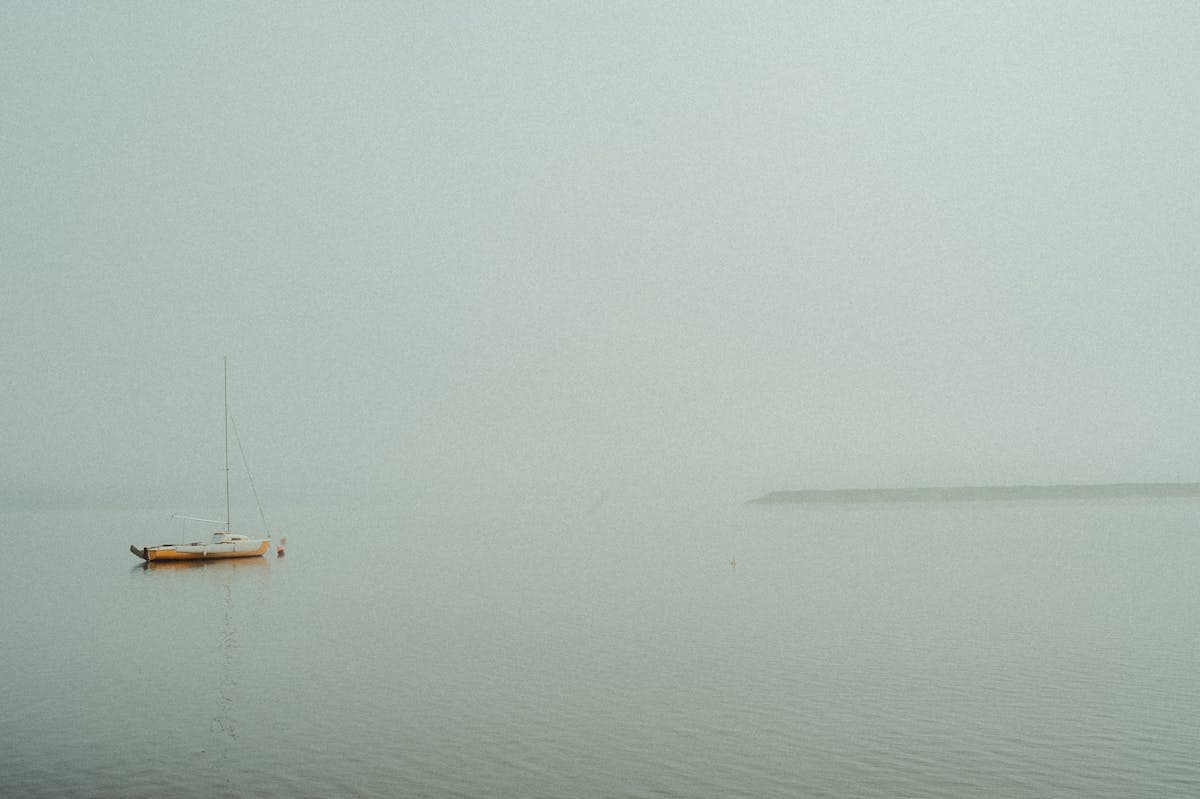
On December 4, 1872, the crew of the Canadian brigantine Dei Gratia spotted something wrong. A ship was drifting about 400 miles east of the Azores, her sails partially set, moving erratically through the Atlantic swells. When they boarded her, they found the Mary Celeste completely abandoned. The cargo was intact. Personal belongings sat undisturbed in the cabins. There was food and water for six months. But the ten people who'd sailed from New York four weeks earlier, including the captain's wife and two-year-old daughter, were gone. They've never been found.
It's been over 150 years, and we still don't have a definitive answer. The Mary Celeste has become the most famous ghost ship in maritime history, and the mystery only deepens the closer you look.
What You'll Learn
- •What Was the Mary Celeste?
- •The Final Voyage: New York to Genoa
- •What Did the Dei Gratia Crew Find?
- •The Gibraltar Investigation
- •Theory 1: Alcohol Vapor Explosion
- •Theory 2: Waterspout or Seaquake
- •Theory 3: Mutiny or Foul Play
- •Theory 4: Piracy
- •Theory 5: Insurance Fraud Conspiracy
- •What Happened After the Mystery
- •Why the Mary Celeste Still Matters
- •Frequently Asked Questions
What Was the Mary Celeste?
The ship that would become the Mary Celeste started life as the Amazon, built at Spencer's Island, Nova Scotia, and launched on May 18, 1861. She was a brigantine, a two-masted sailing vessel about 100 feet long. From the start, the ship seemed to carry bad luck. Her first captain, Robert McLellan, fell ill during her maiden voyage and died before the ship left Canadian waters. His replacement ran into fishing equipment near Eastport, Maine, then collided with a brig in the English Channel.
After years of routine Atlantic trading, a storm drove the Amazon ashore at Cape Breton Island in 1867, damaging her badly enough that her owners abandoned her as a wreck. She changed hands several times before an American buyer, Richard Haines, purchased her for $1,750, spent nearly $9,000 restoring her, and registered her under a new name: Mary Celeste.
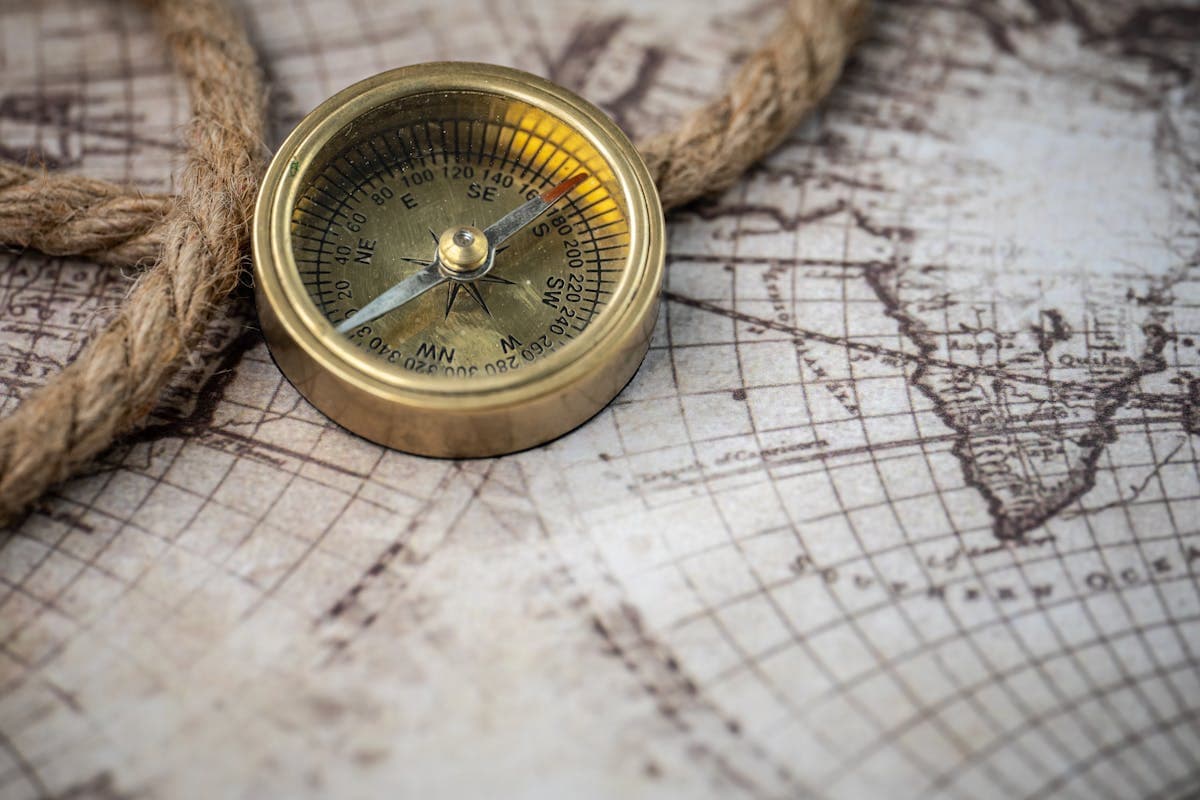
By 1872, the ship was co-owned by a New York consortium led by James H. Winchester. She'd undergone a major refit that increased her length to 103 feet and added a second deck. She was, by all accounts, a solid, seaworthy vessel.
The Final Voyage: New York to Genoa
Captain Benjamin Spooner Briggs took command for the fateful 1872 voyage. He was 37 years old, experienced, well-respected, and deeply religious. He owned four of the ship's twelve shares. For this trip to Genoa, Italy, he brought along his wife Sarah and their two-year-old daughter Sophia Matilda. Their seven-year-old son Arthur stayed behind with his grandmother.
Briggs handpicked his crew of seven. First mate Albert Richardson had sailed with him before and was married to a niece of the ship's co-owner Winchester. The four general seamen were German brothers Volkert and Boz Lorenzen, along with Arian Martens and Gottlieb Goudschaal, all from the Frisian Islands. A later testimonial described them as "peaceable and first-class sailors."
The Mary Celeste's cargo consisted of 1,701 barrels of denatured industrial alcohol, destined for Italian wine fortification. She departed Pier 50 on the East River on November 5, 1872, but bad weather kept her anchored off Staten Island for two days. On November 7, conditions cleared, and she headed into the open Atlantic.
Eight days later, on November 15, the Dei Gratia left Hoboken, New Jersey, following roughly the same route. Her captain, David Morehouse, was a fellow Nova Scotian. Some accounts claim he and Briggs dined together the night before Mary Celeste sailed, though the only evidence for this comes from Morehouse's widow recalling events 50 years later.
What Did the Dei Gratia Crew Find?
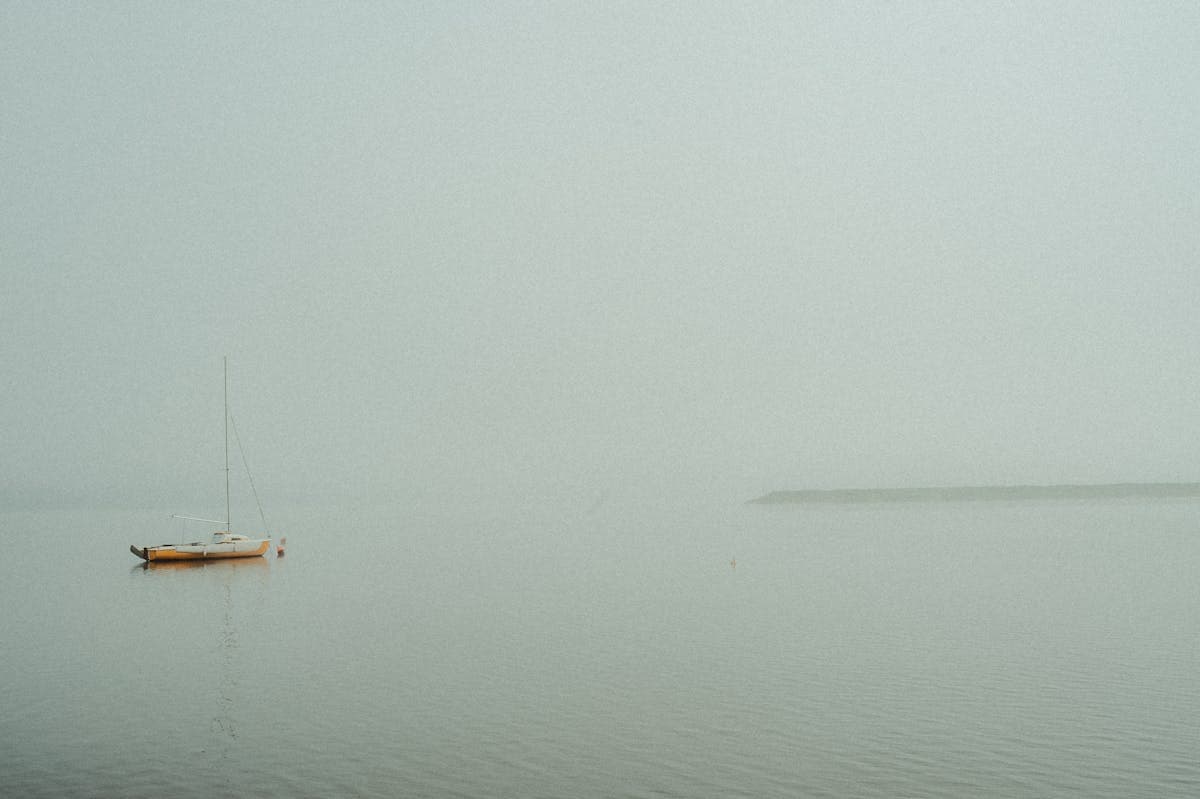
On the afternoon of December 4, the Dei Gratia spotted the Mary Celeste roughly 600 miles west of Portugal, between the Azores and the Portuguese coast. Her movements looked wrong. She was sailing erratically, and something about her rigging didn't sit right. After watching her for about two hours, Morehouse sent first mate Oliver Deveau and two others to investigate.
What they found has puzzled people for over a century.
The ship was deserted. Here's what the boarding party documented:
What was present:
- •1,701 barrels of industrial alcohol (though nine were later found empty)
- •Six months' supply of food and fresh water
- •Personal belongings of the crew, including pipes, clothing, and boots
- •The captain's logbook with entries up to November 24
- •The ship's register and other papers
- •A slate log (a temporary record) with a notation dated November 25, recording the ship's position near Santa Maria Island in the Azores
- •The cargo, largely undisturbed
What was missing or damaged:
- •The ship's yawl (a small lifeboat, normally towed behind or stowed on deck)
- •The ship's chronometer, sextant, and navigation instruments
- •About 3.5 feet of water in the hold (not dangerous for a ship this size)
- •The main hatch cover was off, and two of the three smaller hatches were open
- •Some rigging was damaged, and several sails were badly set or missing
- •A section of railing on one side had been removed or knocked away
- •The ship's single lifeboat was gone, and marks on the hull suggested it had been launched hastily
- •A length of rope trailed from the ship, cut or broken
The last log entry placed the Mary Celeste about 100 miles west of where she was found, roughly ten days later. That meant the ship had sailed herself, without anyone at the helm, across about 400 miles of open ocean.
Deveau and two Dei Gratia crewmen sailed the Mary Celeste to Gibraltar, arriving on December 13.
The Gibraltar Investigation
The admiralty court investigation in Gibraltar was led by Frederick Solly-Flood, the Attorney General. Flood was suspicious from the start, and he wasn't subtle about it. He seemed convinced that foul play was behind the abandonment and spent months trying to prove it.
Surveyors inspected the ship. They found what appeared to be blood stains on the deck and on a sword found under the captain's berth. Flood seized on this as evidence of violence. However, the "blood" was later tested and turned out to be rust, or possibly a naturally occurring deposit. The sword showed no evidence of having been used as a weapon.
Flood suspected the Dei Gratia crew of conspiracy, maybe even murder, but he couldn't produce evidence. He also floated the theory that Mary Celeste's crew had gotten drunk on the alcohol cargo and killed the officers in a frenzy. This theory didn't hold up either. The alcohol was denatured (poisonous to drink), and Captain Briggs was a known teetotaler who wouldn't have hired men prone to drinking.
The investigation dragged on for months but reached no definitive conclusion. The Dei Gratia crew received a salvage award of about $1,700, which was significantly less than the typical amount. The low payment reflected the court's lingering, unproven suspicions.
Theory 1: Alcohol Vapor Explosion
This is probably the most scientifically supported theory, and it's gained serious traction in recent decades.
Nine of the 1,701 barrels were found empty when the cargo was unloaded at Genoa. Those nine barrels were made of red oak, which is more porous than the white oak barrels that held the rest. The thinking goes like this: alcohol vapors leaked from the red oak barrels, accumulated in the hold, and ignited, producing a dramatic but brief fireball.
In 2006, Dr. Andrea Sella at University College London tested this theory by building a scale replica of the ship's hold and igniting butane gas inside it. The result was a "pressure-wave type of explosion," a spectacular rush of flame that left no soot, no scorch marks, and no fire damage. It would've looked and felt terrifying, like the ship was about to blow, but it was essentially harmless.
If Captain Briggs opened the main hatch and saw flames erupting from below, he'd have had every reason to believe the ship was about to explode. With 1,701 barrels of alcohol underneath him, getting everyone into the lifeboat immediately would've been the obvious call. The theory suggests they evacuated hastily, possibly tied the yawl to the ship with a line (which would explain the trailing rope), and intended to reboard once they knew the ship was safe. But the line broke or came loose, and the Mary Celeste drifted away, leaving ten people stranded in a small boat in the open Atlantic.
Evidence for: Explains the missing nine barrels, the open hatches, the removed railing (to launch the boat quickly), the trailing rope, and the lack of any fire damage. UCL experiment proved such an explosion was possible without leaving traces.
Evidence against: No crew member left any note or signal. It relies on a chain of unfortunate events all going wrong simultaneously.
Theory 2: Waterspout or Seaquake
The Mary Celeste passed through an area of the Atlantic known for unpredictable weather. Some researchers have suggested that a waterspout, a tornado-like column of spinning water, could've struck the ship or passed close enough to terrify the crew into abandoning ship.
A related theory involves a submarine earthquake or seaquake. These underwater seismic events can create intense vibrations that feel, from aboard a ship, like the vessel is breaking apart. Sailors in the 19th century wouldn't have understood what was happening. They might've believed the ship was sinking and launched the lifeboat in panic.
The 3.5 feet of water in the hold could support either scenario. While not immediately dangerous, it might've convinced the crew that the ship was taking on water rapidly, especially if they couldn't determine the source.
Evidence for: Explains the sudden abandonment without signs of violence. The Atlantic's Azores region is geologically active. Could account for the water in the hold.
Evidence against: A waterspout would've caused more visible damage. Seaquakes don't typically put water in a ship's hold. Experienced sailors like Briggs and Richardson would've known 3.5 feet of water wasn't fatal.
Theory 3: Mutiny or Foul Play
This was Attorney General Flood's preferred theory during the Gibraltar investigation, and it's never been entirely ruled out. The basic idea is that some or all of the crew turned on the officers, killed them, and fled in the lifeboat.
Flood initially suspected the four German sailors, particularly because none of their personal possessions were found on the ship (though later accounts dispute this). The brothers Volkert and Boz Lorenzen came under specific suspicion.
Other variations of this theory involve the Dei Gratia crew. The idea is that Morehouse and his men encountered the Mary Celeste, killed or removed its occupants, and then "discovered" the ship to claim the salvage reward. The fact that both ships were heading to roughly the same destination, and that the captains may have known each other, fueled this speculation.
Evidence for: The low salvage award suggests the court had suspicions. The suspiciously clean state of the ship (no obvious explanation for abandonment) could suggest a cover-up.
Evidence against: No evidence of violence was found despite thorough inspection. The "blood stains" turned out to be rust. The crew had excellent references. Briggs was a respected, religious man who chose his crew carefully. The Dei Gratia's crew consisted of only eight men, making it nearly impossible to murder ten people, doctor a logbook, sail both ships to Gibraltar, and maintain a consistent story under months of legal scrutiny. The salvage award was also suspiciously low for this to be a worthwhile scheme.
Theory 4: Piracy
Pirates were still active in parts of the Atlantic in the 1870s, particularly near the coast of North Africa. Could raiders have boarded the Mary Celeste, killed or kidnapped the crew, and left the ship adrift?
It's a dramatic theory, but it doesn't fit the evidence. Pirates would've taken the cargo, or at least the valuable navigational instruments (which were missing, but a pirate raid would've involved more thorough looting). The personal belongings, including money found in the crew's quarters, were untouched. Pirates had no reason to leave a perfectly good ship behind.
Evidence for: The missing navigation instruments and lifeboat could indicate an outside force took the crew. Pirates operated in the region.
Evidence against: Cargo untouched, valuables left behind, no signs of struggle or forced boarding. Doesn't match typical pirate behavior at all.
Theory 5: Insurance Fraud Conspiracy
Some researchers have proposed that Winchester and Briggs conspired to abandon the ship and claim insurance money. The theory suggests the crew was secretly taken off, the ship was set adrift, and the Dei Gratia was supposed to "find" it.
Interestingly, the Mary Celeste's later history adds a curious footnote to this theory. In 1885, a different captain, Gilman Parker, deliberately wrecked the ship on a reef off Haiti as part of a proven insurance fraud scheme. Parker was charged but died before trial. It shows that insurance fraud involving the Mary Celeste wasn't unprecedented, at least the idea of it.
Evidence for: The ship was overinsured. Winchester had financial pressures. The Mary Celeste was later destroyed in an actual insurance fraud.
Evidence against: Briggs had invested his life savings in the ship and had his wife and daughter aboard. No one involved ever received an insurance payout for the 1872 incident. The low salvage award suggests the authorities suspected fraud but couldn't prove it, which means the scheme (if it existed) failed completely. There's no plausible way to secretly offload ten people mid-Atlantic without anyone ever talking.
What Happened After the Mystery
After the Gibraltar hearings, the Mary Celeste was returned to her owners and continued trading for over a decade. She changed hands seventeen times, as if no one could hold onto her for long. Her reputation as a cursed ship made her difficult to sell and harder to crew.
In January 1885, Captain Gilman Parker loaded her with a deliberately overvalued and essentially worthless cargo, then ran her onto Rochelais Reef off Haiti. The insurance companies investigated, uncovered the fraud, and Parker was charged. He died three months after the trial, reportedly from natural causes, though some say he drank himself to death.
The wreck of the Mary Celeste sat on that Haitian reef for years before breaking apart. In 2001, an underwater archaeological expedition led by novelist Clive Cussler claimed to have located the remains near the reef, though positive identification has been debated.
Arthur Conan Doyle, who'd later create Sherlock Holmes, wrote "J. Habakuk Jephson's Statement" in 1884, a fictionalized account of the mystery. His story, published in the Cornhill Magazine, was so convincing that some readers thought it was a real survivor's account. Doyle misspelled the ship's name as "Marie Celeste," and that incorrect spelling persisted for decades.
The case has inspired dozens of books, films, and documentaries. A 1935 movie starring Bela Lugosi, "The Mystery of the Marie Celeste," is among the most famous adaptations. The ship's name has become shorthand for any place found mysteriously abandoned, similar to the Bermuda Triangle's reputation for unexplained vanishings.
Why the Mary Celeste Still Matters
What makes the Mary Celeste so enduring isn't just the mystery itself. It's the quality of the mystery. Unlike cases where evidence was lost or investigations were botched, the Mary Celeste was thoroughly examined. A formal admiralty court spent months on it. The ship was inspected stem to stern. Witnesses were deposed. And still, no one could figure it out.
The alcohol vapor theory comes closest to a satisfying explanation, and many maritime historians consider it the by one account scenario. But even it requires a specific sequence of events: the leak, the ignition, the panic, the hasty evacuation, and then the line breaking, leaving everyone adrift with no way back. It's plausible. It's just not proven.
The Mary Celeste reminds us that the ocean keeps its secrets. In an era before radio, before GPS, before satellite tracking, a ship could simply vanish, and its story would be whatever the sea chose to reveal. The disappearance of MH370 in 2014 proved that even modern technology can't always answer the question: where did they go?
We don't know what happened to Benjamin Briggs, his wife Sarah, baby Sophia, or the seven crew members. We probably never will. And perhaps that's exactly why, more than 150 years later, people are still looking for answers.
Frequently Asked Questions
Was the Mary Celeste ever found with food still on the table?
That's a popular myth, but it isn't accurate. The idea of half-eaten meals comes from Arthur Conan Doyle's fictionalized 1884 story, not from the actual investigation. The real boarding party found the ship abandoned but didn't report freshly prepared meals. The galley stove had been displaced, likely by rough weather, and there was no evidence of a meal in progress.
How many people were on the Mary Celeste when it disappeared?
Ten people were aboard: Captain Benjamin Briggs, his wife Sarah, their two-year-old daughter Sophia Matilda, first mate Albert Richardson, second mate Andrew Gilling, steward Edward Head, and four German seamen (Volkert Lorenzen, Boz Lorenzen, Arian Martens, and Gottlieb Goudschaal). None were ever seen again.
Is the Mary Celeste connected to the Bermuda Triangle?
No. The Mary Celeste was found between the Azores and Portugal, in the eastern Atlantic Ocean. That's thousands of miles from the Bermuda Triangle, which is located between Miami, Bermuda, and Puerto Rico. The confusion likely stems from both involving ships and unsolved disappearances.
What is the most accepted theory for the Mary Celeste?
Most modern maritime historians lean toward the alcohol vapor explosion theory. Dr. Andrea Sella's 2006 experiment at UCL demonstrated that leaking alcohol could produce a dramatic but traceless explosion. This would've given Captain Briggs reason to evacuate immediately, and if the tow line broke, the crew would've been stranded in the open Atlantic with no way to reboard.
Has anyone ever found the wreck of the Mary Celeste?
In 2001, an expedition funded by novelist Clive Cussler located remains on Rochelais Reef off Haiti, where the ship was deliberately wrecked in 1885. The team claimed to have confirmed the wreck's identity, though some researchers have questioned whether the remains are definitively the Mary Celeste.
Want to explore more mysteries?
We've got plenty more rabbit holes to go down.